

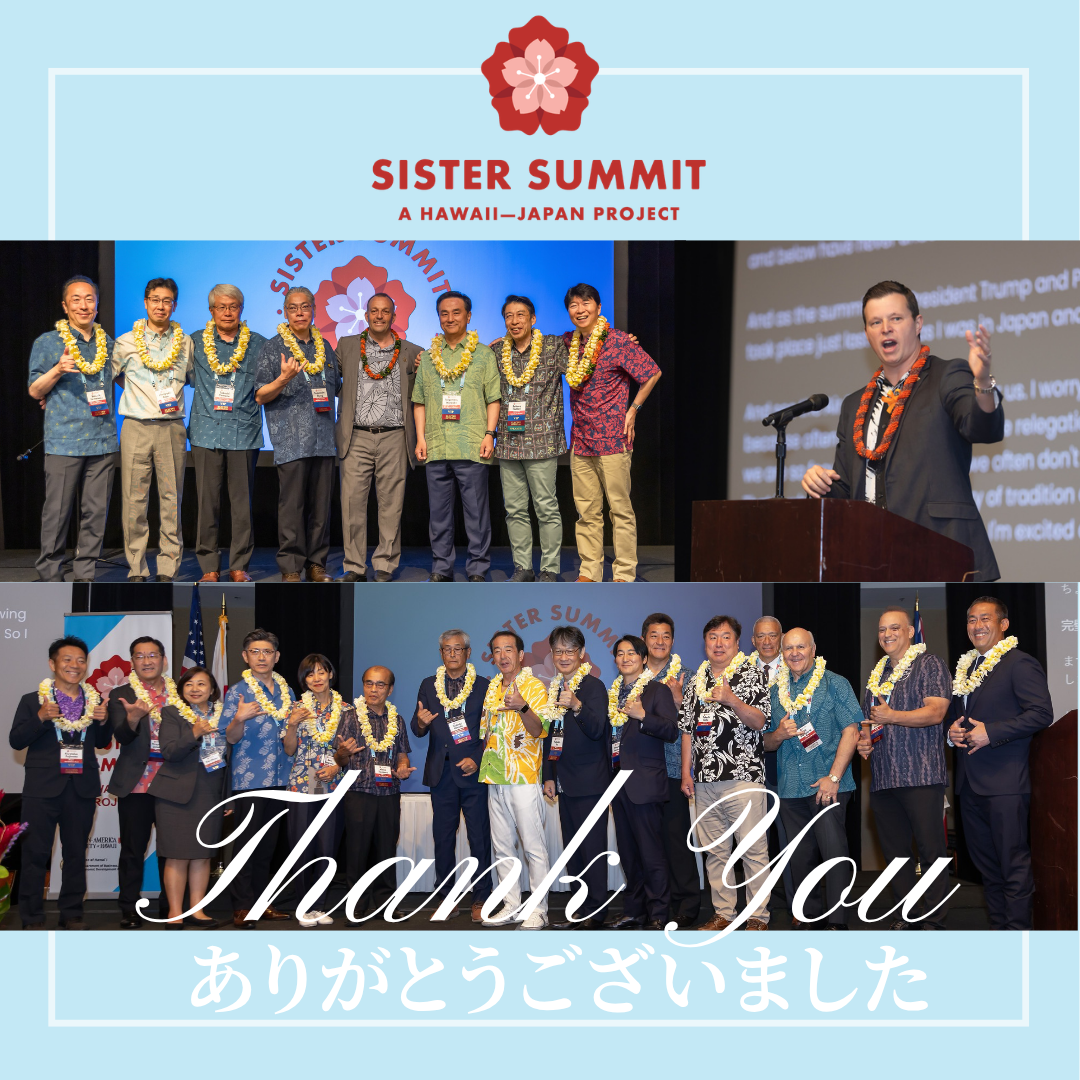
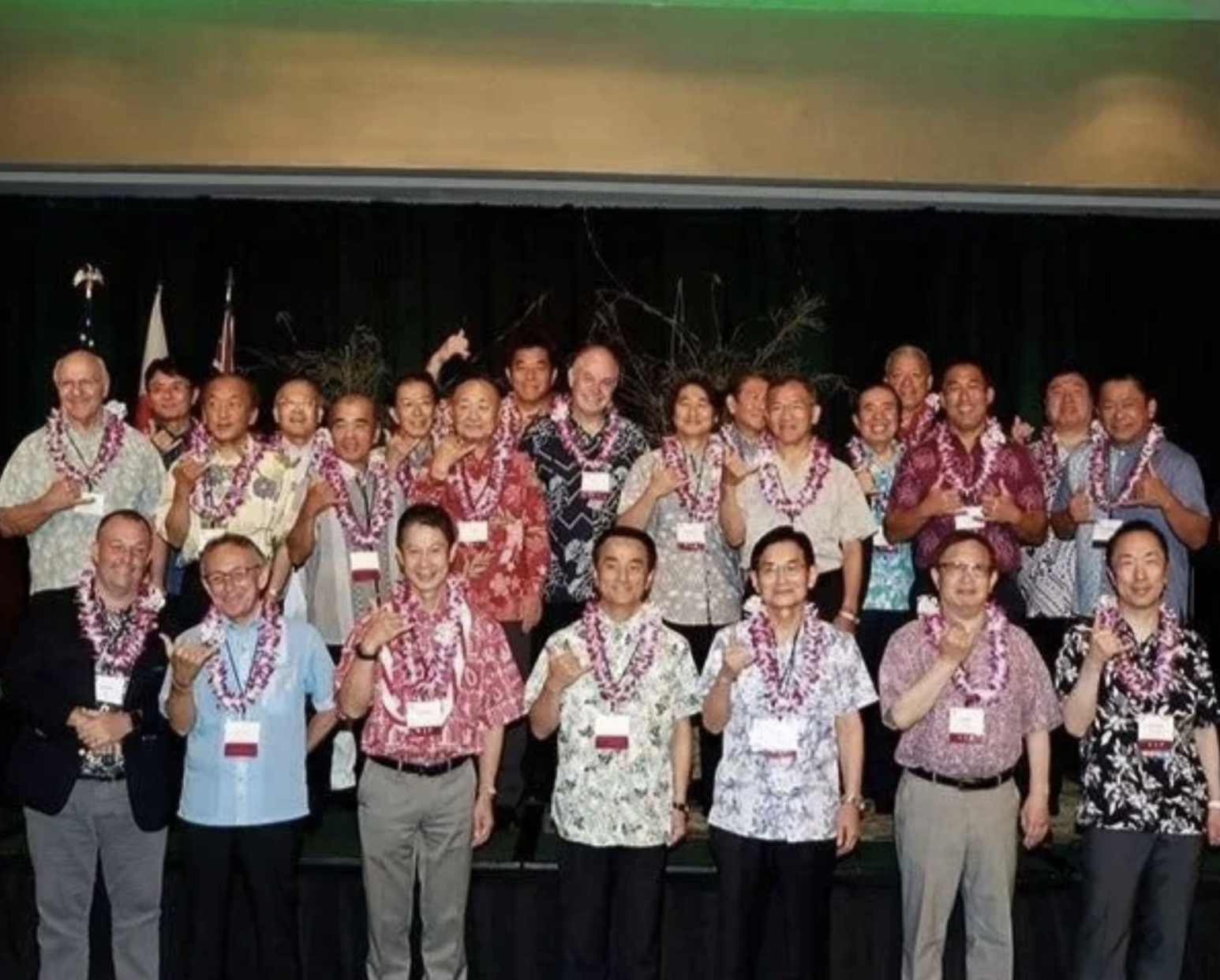
Mahalo for Joining Us at the 2026 Hawaiʻi–Japan Sister State and Sister City Summit!
We extend our sincere appreciation to all of our delegates, speakers, sponsors, community partners, volunteers, and attendees who helped make this year’s Summit a meaningful and successful gathering. Through engaging discussions, cultural exchange, and collaboration, the Summit highlighted the strong and enduring relationship between Hawaiʻi and Japan.
We were honored to welcome participants from our sister states and cities across Japan, including governors, mayors, government officials, business leaders, educators, and community members. Your presence helped foster valuable conversations, strengthen partnerships, and deepen connections across the Pacific.
Thank you for your continued support of the Japan-America Society of Hawaii and our shared commitment to strengthening understanding, friendship, and cooperation between Hawaiʻi and Japan. We look forward to building on the momentum of this year's Summit and continuing these important relationships for years to come.

MAY 20-21, 2026
Hilton Hawaiian Village
Honolulu, Hawaiʻi
GOVERNMENT POLICY FORUM
MAY 22, 2026
[BY INVITATION ONLY]
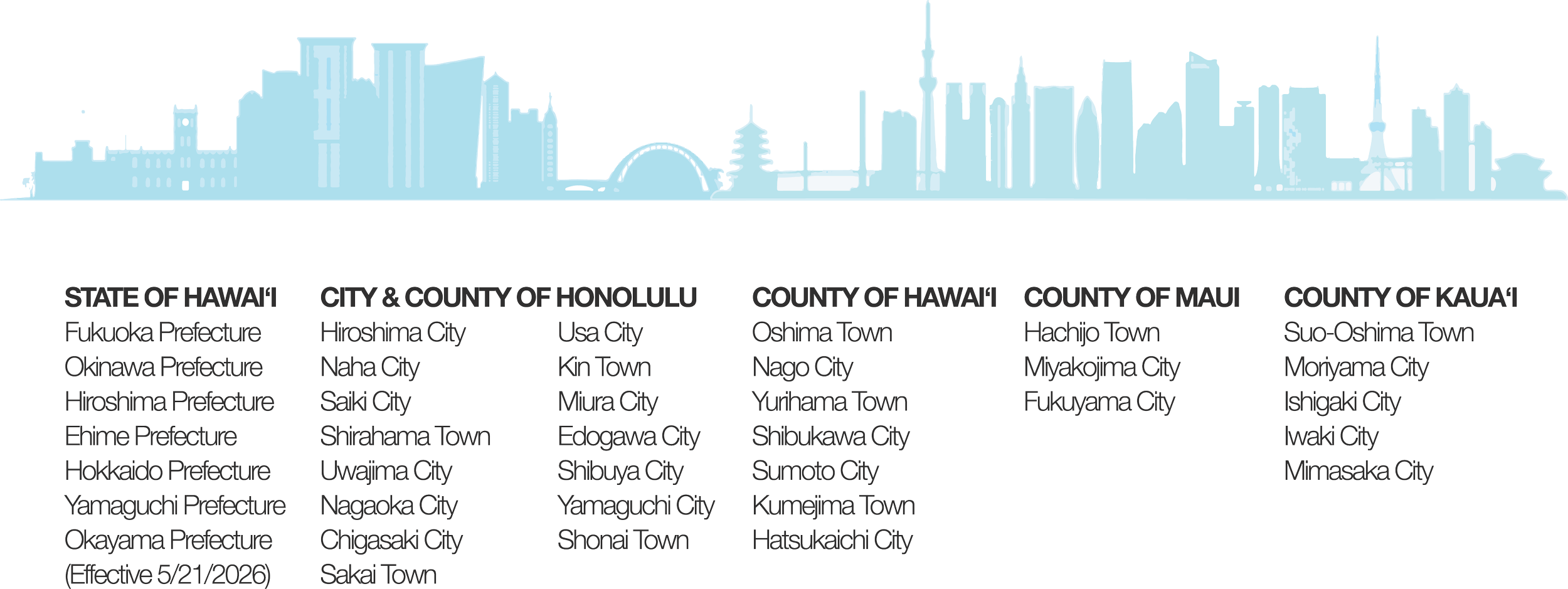
ABOUT THE SISTER-STATE & SISTER-CITY PROGRAMS
Sister-State and Sister-City programs harness the power of people-to-people and government-to-government relationships to transform goodwill into meaningful, long-term collaboration. By creating trusted platforms for economic exchange, educational partnerships, cultural understanding, and policy dialogue, these programs enable states, prefectures, cities, and communities to share solutions, unlock new opportunities, and respond collectively to shared challenges. When actively nurtured, Sister relationships become strategic assets—strengthening local economies, deepening mutual respect, and reinforcing international ties that endure across generations and political cycles.


JOIN US IN
HONOLULU
Where Relationships Deepen.
Ideas Ignite. The Future Takes Shape.
Two nations. One Pacific. A shared vision for what’s next.
Hawai’i and Japan come together once again for a landmark gathering of leaders, innovators, and changemakers when we convene the 2026 Hawai’i–Japan Sister State and Sister City Summit, which will include a Hawai’i–Japan Economic Policy Forum. Building on the extraordinary success of the inaugural 2023 Summit—the largest Hawai’i–Japan international convening in more than two decades—this next chapter promises even greater impact.
From governors and mayors to business, nonprofit, and community leaders, the Sister Summit is where we will sustain, deepen, and expand ties and shape the future together.
With inspiring keynote speakers, timely policy and economic dialogue, dynamic panel discussions, a vibrant marketplace showcasing Hawai’i and Japan, and multiple networking opportunities, this is the place to be for those that have an interest in the Pacific region’s future. Join more than 400 leaders from Hawai’i and Japan as we work toward Creating Our Future – by charting a bold course forward together.
OPENING SESSION
HILTON HAWAIIAN VILLAGE

PhD, President & CEO, Japan Society New York
Joshua W. Walker, PhD, has served as President and CEO of Japan Society since December 2019. Previously, he was Global Head of Strategic Initiatives and Japan at Eurasia Group in the Office of the President. Earlier roles include President and CEO of the USA Pavilion at the 2017 World Expo in Astana, Founding Dean of the APCO Institute, and Senior Vice President of Global Programs at APCO Worldwide. Before entering the private sector, he held positions at several U.S. government agencies, including the State and Defense Departments. Dr. Walker is a Senior Fellow at the Center for the Study of the Presidency and Congress and a Professor of Leadership and the American Presidency at George Mason University and the Reagan Foundation. He co-founded the Yale Journal of International Affairs and holds degrees from the University of Richmond, Yale University, and Princeton University. Raised in Japan, he is bilingual and bicultural.
BREAKOUT
DISCUSSIONS
-
The concept of One Health—which recognizes the interconnection between people, animals, plants, and their shared environment—has deep roots in the cultural practices and philosophies of both Hawaiʻi and Japan. These two places, though geographically distinct, share a holistic approach to well-being that has helped foster long lives, deep community bonds, and respect for nature. The quality of life in Hawaiʻi and Japan is admired throughout the world. One Health is more than just medical; it incorporates and integrates the resources that surrounds us and sustains and improves our well-being.
What are the secrets of One Health that Hawaiʻi and Japan can learn from each other and share with the rest of the world?
-
Dr. Sandra P. Chang is a Professor in the Department of Tropical Medicine, Medical Microbiology & Pharmacology, John A. Burns School of Medicine, University of Hawai‘i at Manoa. A native of Hawai‘i, Dr. Chang completed her BS and MS degrees at University of Hawai‘i. She obtained a PhD in Microbiology & Immunology from Oregon Health and Science University and did her postdoctoral training at California Institute of Technology. Dr. Chang’s One Health interests include One Health education at the high school, college, and graduate levels as well as One Health research on zoonotic and vector-borne infectious diseases, and the effects of climate change on health. Dr. Chang is Director of the UH Manoa One Health Undergraduate Certificate Program and the JABSOM Dean’s Certificate of Distinction in One Health for medical students. She is also a steering committee member of the Climate Change and Health Working Group.
What are the secrets of One Health that Hawaiʻi and Japan can learn from each other and share with the rest of the world?
-
Governor Josh Green is a dedicated physician, husband, father, and was elected Hawai‘i’s ninth Governor in 2022. Raised in Pittsburgh, Pennsylvania, he earned degrees in biology and anthropology from Swarthmore College and an M.D. from Penn State’s College of Medicine. After completing his residency, he served the community of Ka‘ū on Hawai‘i Island, as a member of the National Health service Corps. Dr. Green served in the Hawai‘i House of Representatives, in the Hawai‘i State Senate and as Lieutenant Governor, during which he was the point person addressing the COVID Pandemic. As Governor, Dr. Green has prioritized affordability, housing, healthcare, and climate action. He enacted the largest income tax cut in Hawai‘i’s history, accelerated the development of over 62,000 affordable housing units, expanded homelessness initiatives like kauhale villages, and launched programs to address the state’s healthcare workforce shortage. His leadership during the Maui wildfire recovery housed nearly 8,000 survivors and secured billions of dollars for recovery efforts. Governor Green remains deeply committed to improving the lives of Hawai‘i’s families and building a more sustainable future.
-
Education : Bachelor of Law, Chuo University, JAPAN
April 2004 Director, Division of Prefectural Universities and Religious Corporations, Bureau of Private Schools and
Educational Affairs, General Affairs Department
April 2006 Director, Division of the Budget, General Affairs Department
April 2009 Vice Director General, General Affairs Department
April 2010 Director General, Welfare and Labor Department
Oct 2011 Vice Governor of Fukuoka Prefecture
Apr 2021 Governor of Fukuoka Prefecture
-
Dr. Pelican has worked in 45 countries to strengthen the multi sectoral systems needed to address the world’s most complex challenges in the integrative fields of One Health and the Sustainable Development Goals (SDGs). She founded and directed the SPARC office at U. Minnesota charged with establishing and growing large-scale, interdisciplinary programs and projects. She founded and co-lead the system-wide SDG Initiative to mobilize UMN to meet these 17 UN goals from the local to the global level. She also created the OH-SMART toolkit that has improved multi-sectoral cooperation around complex challenges in the US and 29 countries globally. Dr. Pelican joined the University of Hawaii in 2025 as the inaugural Director of the Health Sciences Institute at UH Manoa where she is advancing interdisciplinary programs and projects across the UH system to improve the health and well being of the people of Hawaii and communities throughout the Pacific Rim.

-
Japan leads the global digital pop culture economy, having transformed anime, gaming, and e-sports into multibillion-dollar industries with worldwide influence. These sectors are not only redefining entertainment— they’re shaping the future of technology and cultural diplomacy. The Business of Pop Culture seminar explores how Hawaiʻi can move from passive consumer to active contributor in this creative economy. With deep cultural ties to Asia, a strategic Pacific location, and a growing ecosystem of talent, Hawaiʻi is uniquely positioned to become a hub for innovation and exchange in anime and e-sports. For Japan, this partnership offers valuable opportunities to expand market reach, incubate new ideas in a diverse cultural setting, and strengthen people-to-people ties across the Pacific. Hawaiʻi’s multicultural landscape and global connectivity make it an ideal bridge for Japan to engage broader audiences and co-develop creative content with international appeal. This seminar brings together policymakers, entrepreneurs, educators, and creatives to learn from industry leaders, examine Japan’s successful models, and forge new paths for collaboration, investment, and sustainable growth. As Hawaiʻi stands at the crossroads of culture and commerce, the question is clear: How will we shape our shared role in the next chapter of the global digital renaissance?
-
Mari Erdman is a bilingual, bicultural Japanese-American professional whose life and career sit at the intersection of Hawaiʻi, Japan, pop culture, and technology. Spending summers in Japan, she developed a deep connection to Japanese culture and began playing classic video games more than 25 years ago, sparking a lifelong passion for gaming, anime, and cross-cultural storytelling. Her career spans the creative, gaming, and technology industries. Mari spent five years at Sony Interactive Entertainment, supporting product management initiatives and contributing to the launch of the PlayStation 5. She also contributed bilingual content and advertising campaigns at PacRim Marketing Group, and gained experience in Hawaiʻi supporting Japan-focused marketing efforts. Based in Kyoto, she works at a cancer research and treatment clinic where she is designing a bilingual clinical app and building data systems for genomics research. She brings the spirit of innovation from the gaming world into healthcare technology. She holds an Executive MBA from the University of Hawaiʻi at Mānoa Shidler College of Business.
-
Sae Sugiura Joined Shibuya City in 1995 as an architectural engineer. After overseeing projects such as the construction of Shibuya City’s first integrated elementary and junior high school, she served as Director of the Government Building Construction Office in the General Affairs Department in 2014, leading a public-private partnership project to rebuild the city hall. She promoted office and workstyle reforms at the new government building, and in 2019, as Chief of the Personnel Division in the General Affairs Department, she implemented institutional reforms to promote flexible working arrangements for staff. She has held her current position since October 2021.
-
Ricky Uy is the Co-founder and CEO of KOMODO, an international video game developer, publisher, and the official distribution partner for Valve's Steam Deck across Asia, with hubs in Honolulu, Tokyo, and Seoul. He leads a 100% employee-owned organization dedicated to shaping the future of entertainment through games, hardware logistics, and digital storytelling platforms like the indie manga app, NIUHI. Driven by the core philosophy that "people are at their best when they play," his mission is to create cross-cultural products that empower, educate, and entertain a global audience. Under his leadership since April 2021, KOMODO has rapidly grown to champion borderless entertainment and support independent creators, leveraging his prior experience at Valve to secure the Steam Deck distribution partnership in Asia. He was also honored as a winner at the 2024 Hawaii Entrepreneur Awards.
-
Michiteru Okabe is a seasoned Game Producer and Director with over 30 years of experience shaping the global gaming landscape. Having led development at industry titans including Capcom, Sega, and FromSoftware, he specializes in steering complex, multi-partner projects from initial concept to worldwide launch. A veteran of both first-party and external collaborations, Masaki is renowned for his expertise in global marketing strategy and his ability to foster successful partnerships that deliver world-class entertainment.
-
Sky Kauweloa, PhD, is a Faculty Specialist and Researcher in the Interdisciplinary Studies Department at University of Hawaiʻi at Mānoa. Dr. Kauweloa’s work sits at the intersection of media theory, game studies, and disability studies, with a sustained focus on technological and institutional infrastructures. Dr. Kauweloa works internationally with Gen.G in South Korea, gaining experience with global esports ecosystems and talent development structures. In 2021, he led a partnership with Activision Blizzard to host the first international professional esports tournament in Hawaiʻi for the world-renowned Overwatch League. In the area of workforce development, Dr. Kauweloa launched the first esports pipeline course at UH Mānoa, funded through the State of Hawaiʻi’s Good Jobs Hawaiʻi initiative, creating structured pathways into digital media and esports careers.
-
Lani focuses on building partnerships, supporting creators, and guiding the overall direction of VToku. Her work centers on connecting technology with real people and real projects, and making sure creators feel supported through the entire process rather than left to figure it out alone. Her background includes talent management, virtual events, production planning, and community building in online creator spaces. At VToku, she works directly with partners, clients, and team members to keep projects aligned with the company’s values and long-term goals.

-
The economic relationship between Japan and Hawaiʻi is deeply interconnected, with tourism playing a central role. Japanese visitors have long been one of Hawaiʻi’s most significant international tourist groups, contributing billions annually to the local economy through spending on accommodations, shopping, dining, and cultural activities. In return, Hawaiʻi serves as a gateway for Japanese businesses and investors seeking opportunities in the U.S. market, particularly in real estate and hospitality. This mutual exchange fosters job creation, supports small businesses, and strengthens cultural ties. However, fluctuations in exchange rates, travel trends, and economic conditions in Japan can directly impact Hawaiʻi’s tourism revenue, highlighting the economic interdependence between the two regions. The purpose of this panel is to provide an overview of the economic relationships between Hawaiʻi and Japan which provides an important foundation for trade, commerce and collaboration.
-
Colbert Matsumoto is an executive leader based in Hawaii. He currently is the Chairman of Tradewind Group, Inc., a diversified corporate holding company with regionally focused operating subsidiaries in insurance underwriting, finance and investments, logistics and distribution, and IT services. He has decades of experience in corporate governance, investment management, and complex legal and fiduciary matters. Over the course of his career, Mr. Matsumoto has advised and led closely held businesses, nonprofit organizations, and community institutions, including organizations focused on cultural preservation and public service. He has played key roles in corporate restructurings and the revitalization of legacy enterprises. Widely respected for his analytical rigor and strategic perspective, he is also actively engaged in philanthropic and civic initiatives in Hawaiʻi and nationally, with a particular interest in strengthening institutions, mentoring leaders, and advancing long-term sustainability.
-
Jake is an economist for the Hawai'i Department of Business, Economic Development, and Tourism (DBEDT). In this role, he analyzes the state's economy to help the public and policymakers better understand economic issues and inform decision making. Prior to working at DBEDT, Jake served as an agricultural economist at the U.S. Department of Agriculture where he focused on international trade, agricultural policy, disaster assistance, and commodity market analysis. Before his time in government, Jake worked for Dairy Farmers of America, one of the largest dairy companies in the world and a farmer-owned cooperative, where he traded commodities and helped farmers market their milk. Jake is a graduate of Ohio State University and grew up in Ohio and Vermont.
-
James Kunane Tokioka was named Director of the Department of Business, Economic Development and Tourism (DBEDT) on May 5, 2023. Prior to that, he served as the Deputy Director for the Department of Transportation’s Airports Division. Tokioka began his political career as a member of the Kaua‘i County Council in 1996, where he served for 10 years. He then went on to serve for 16 years as a member of the Hawai‘i State
House of Representatives. Prior to his public service, Tokioka worked his way through the hospitality industry, both in Hawai‘i and across the continental United States, doing everything from bussing tables to managing hotels and owning restaurants. Tokioka has also worked for Oceanic Time Warner Cable/Spectrum, where he oversaw new business management programs and assisted with securing the largest single contract in the company’s history. Tokioka studied at Holiday University in Mississippi, where he completed the accelerated certification program in Hotel, Food and Beverage, Guest Services and Security Management.
-
Neill serves as Vice Chair of the Retail Banking and Consumer Products Group at First Hawaiian Bank, overseeing the bank’s 49-branch network across Hawaiʻi, Guam, and Saipan, as well as the Consumer Products, Enterprise Operations, Residential Real Estate, International Banking, and Design & Development divisions. He leads Community Banking, Personal Banking, and Business Banking, with responsibility for more than 1,000 employees. A member of the Senior Management Committee, Neill joined First Hawaiian Bank in 2001 and has held executive leadership roles across Commercial Banking, Retail Banking, Wealth Management, and Wholesale Banking. He serves on the boards of the Rehabilitation Hospital of the Pacific, Friends of Hawaiʻi Charities, and the Japan-America Society of Hawaiʻi, and holds a bachelor’s degree in finance from the University of Hawaiʻi. In his free time, he enjoys cooking, free diving, snowboarding, and traveling with an interest in culture, history, art and architecture.
-
March 1985 Graduated from Keio University, Faculty of Economics
April 1985 Joined the Company
December 2000 Director, Flight Crew, Industrial Relations
October 2009 Vice President, Administration and Planning, Cabin Attendants
April 2013 Executive Officer, Senior Vice President, Human Resources
April 2015 Managing Executive Officer, Senior Vice President, Human Resources
April 2016 Managing Executive Officer, Senior Director, Executive Secretariat Office
June 2018 Director, Managing Executive Officer
Senior Director, Executive Secretariat Office
April 2019 Director, Senior Managing Executive Officer
Senior Director, Executive Secretariat Office
April 2020 Representative Director, Executive Vice President
April 2024 Director, Vice Chairperson
June 2024 Vice Chairperson (to present)

-
Rich cultural heritages, breathtaking landscapes, and stunning seascapes... Japan and Hawaiʻi share many similarities. Unfortunately, our shared similarities also include vulnerabilities to natural and manmade disasters. Globally, severe weather-related events are increasing in intensity, resulting in destruction without regard for social status, political affiliation, or religious adherence. Communities built on fault lines or near volcanoes are susceptible to impact, often with little predictability or warning. Our shared island status also presents logistical challenges to receiving aid in an efficient and timely manner, requiring local communities to manage on their own before relief arrives. In response, the concept of promoting “resilient communities” is gaining recognition and support. This session will focus on sharing lessons learned and suggestions for preparing individuals and communities for the next unexpected “Black Swan” event.
-
Molly Schmidt joined the American Red Cross, Pacific Islands Region in 2024, as Regional Chief Operating Officer before becoming Regional Executive for the Pacific Islands, including Hawaiʻi, Guam, Northern Marianas Islands, and American Samoa. She has 21 years of experience working with international NGOs and community-based nonprofits, including leadership roles with the Girl Scouts of Hawaiʻi and Northern California. Previously, she served with the International Federation of Red Cross and Red Crescent Societies (IFRC) Southeast Asia Regional Delegation post the 2004 tsunami. She worked with Partner National Societies (PNS), including the American Red Cross, focusing on health in disasters and capacity building. Disaster preparedness, response, and recovery were woven into the health emergencies work she led post SARS and during H1N1 Bird Flu that was rampant in Southeast Asia. At the IFRC, she coordinated an inter-agency collaboration communication network with all PNS, United Nations, WHO, and other INGOs.
-
Vice Governor Miyagi was born in Nago City, Okinawa Prefecture. After joining the Okinawa Prefectural Government in 1988, he held key positions across a wide range of departments, including planning, culture, tourism, and general affairs. Throughout his career, he accumulated extensive practical experience by engaging with critical issues facing Okinawa Prefecture, including regional revitalization, industrial promotion, and tourism policy.
On April 1, 2026, he assumed the position of Vice Governor of Okinawa Prefecture. In this role, he supports Governor Tamaki while working to address pressing challenges facing the prefecture, including regional revitalization, the reduction of the burden of U.S. military bases, and the alleviation of child poverty.
With decades of dedicated public service, Vice Governor Miyagi brings a wealth of knowledge and experience to his new role in leading Okinawa toward a brighter future.
-
Mayor Uchida, who was born and raised in Iwaki City, has been serving as the Mayor of Iwaki City since 2021 and is currently in his second term. He began his career at Japan’s Ministry of Education, Culture, Sports, Science and Technology (MEXT) and has held key positions, including Director of the High School Education Division at the Akita Prefectural Board of Education and Director of the Office for Education Reform at MEXT. He also served as Executive Trustee and Secretary General at Fukushima University. He holds a Bachelor of Education from Tohoku University and a Master of Education from the University of Tokyo.
-
Retired Colonel James DS. Barros is the Administrator for the Hawaiʻi Emergency Management Agency (HIEMA), appointed in February 2023. He leads state-level disaster preparedness, response, and recovery efforts, collaborating with local, state, and federal partners. Col. Barros spent 32 years in the Hawai‘i Army National Guard. During the Covid 19 epidemic, he served as Chief of the Joint Staff for the Hawai‘i National Guard’s COVID-19 Joint Task Force supporting Hawaii’s preparation and response to the epidemic. Barros also served as the Hawaii National Guard Director for Joint Domestic Operations supporting State operations including emergency responses to Kaua‘i flooding, Hawai‘i island lava eruption, wildfires on Maui, and preparation for and response to Hurricanes Lane, Norman, and Olivia. He expanded international engagements with the Philippines and Indonesia, and established Combined Task Force conducting joint confined-space training and high-angle rescues during rotations in Hawai‘i.
-
Renise Bayne has served as a disaster manager with the American Red Cross for 15 years. She also held leadership roles as Plans and Operations Officer for the City & County of Honolulu Department of Emergency Management and CARE Coordinator for the State of Hawaii’s COVID-19 Isolation and Quarantine Program. For more than 13 years, Renise has volunteered with the Pacific Islands Region, serving as Direct Services Lead, overseeing all client-facing activities such as sheltering, emergency supply distribution, feeding, health, mental health, spiritual care, disability integration, and client casework. With over 30 deployments—including the 2018 Kīlauea eruption, the Kauaʻi landslide, hurricanes, floods, and wildfires—her experience spans Hawaiʻi, the continental U.S., and across the Pacific. She is also an Advanced Instructor for Disaster Response Services (“Train the Trainer”) and a Community Disaster Education and Preparedness Presenter.
-
Andrea Ciletti leads a specialized team of analysts in translating complex disaster risks into actionable insights across the Indo-Pacific region. Her work focuses on creating informational products for military and civilian responders, increasing readiness for humanitarian assistance and disaster response operations. She has supported various civil-military engagements, exercises, and partner nation capacity building in Australia, Indonesia, Malaysia, Singapore, Thailand, and New Zealand. Andrea’s career is anchored in program management and technical writing. Prior to her current appointment, she served as the Valiant Site Lead for a $23.5 million Department of Defense contract, managing a global team of 34 personnel across five time zones. In this capacity, she oversaw the development and staffing of critical information products, training curricula, and initiatives critical to the U.S. Indo-Pacific Command’s core security objectives. Andrea has also provided vital support to several major defense and environmental projects, including AECOM’s Comprehensive Long-Term Environmental Action Navy (CLEAN) contract.

-
The Indo-Pacific region holds increasing strategic significance for both the United States and Japan, but it also faces rising instability driven by the actions of potential adversaries. Former Prime Minister Shinzo Abe’s vision of a “free and open Indo-Pacific” continues to unite the U.S., Japan, and their allies around a shared goal. In today’s complex geopolitical climate, how can regional and global partners work together to prevent conflict and promote lasting stability in support of this common vision?
-
Joshua W. Walker, PhD, has served as President and CEO of Japan Society since December 2019. Previously, he was Global Head of Strategic Initiatives and Japan at Eurasia Group in the Office of the President. Earlier roles include President and CEO of the USA Pavilion at the 2017 World Expo in Astana, Founding Dean of the APCO Institute, and Senior Vice President of Global Programs at APCO Worldwide. Before entering the private sector, he held positions at several U.S. government agencies, including the State and Defense Departments. Dr. Walker is a Senior Fellow at the Center for the Study of the Presidency and Congress and a Professor of Leadership and the American Presidency at George Mason University and the Reagan Foundation. He co-founded the Yale Journal of International Affairs and holds degrees from the University of Richmond, Yale University, and Princeton University. Raised in Japan, he is bilingual and bicultural.
-
Apr. 1991 Facility Division, Finance and Equipment Bureau, JDA
Jun. 1996 Deputy Director, First Personnel Division, Personnel Bureau, JDA
Jul. 1998 Deputy Director, Legal Affairs Division, Treaties Bureau, MOFA
Jul. 2000 Deputy Director, International Planning Division, Defense Bureau, JDA
Aug. 2002 Deputy Director, Secretariat of the International Peace Cooperation Headquarters, Cabinet office
Sep. 2004 Principal Deputy Director, Strategic Intelligence Analysis Office, Defense Policy Bureau, MOD
Sep. 2007 Principal Deputy Director, International Operation Division, Operation Policy Bureau, MOD
Aug. 2008 Principal Deputy Director, Personnel Affairs Division, Personnel and Education Bureau, MOD
Aug. 2009 Directorate for Geospatial Intelligence, Defense Intelligence Headquarters, MOD
Ma. 2010 Director, Biological and Chemical Weapons Conventions Division, Disarmament, Non-proliferation and Science Department, MOFA
May. 2012 Director, MOD Reform Office, Minister’s Secretariat, MOD
Oct. 2015 Director, International Policy Division, Defense Policy Bureau, MOD
Aug. 2017 Director, Secretarial Division, Minister’s Secretariat, MOD
Aug. 2019 Deputy Director-General for Trade, Economic Cooperation and International Technology Strategy, METI
Jul. 2021 Director General, Chugoku-Shikoku Defense Bureau, MOD
Jul. 2023 Deputy Director General, Defense Intelligence Headquarters
-
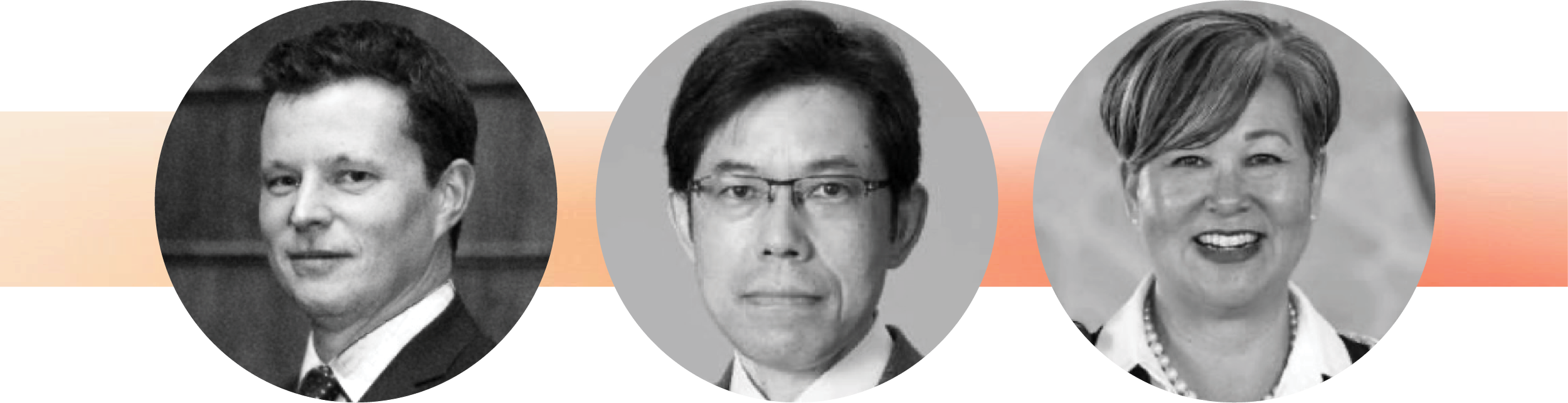
Major General (Retired) Suzanne P. Vares-Lum is the director of the Daniel K. Inouye Asia-Pacific Center for Security Studies (DKI APCSS). She leads the U.S. Department of War organization dedicated to advancing security cooperation from the United States, its allies, and partners to develop solutions for the Indo-Pacific’s complex security challenges. Born and raised in Hawai’i, Vares-Lum has a distinguished 34-year military career, retiring as a major general in 2021. She spent over five years at the U.S. Indo-Pacific Command, serving as the Mobilization Assistant to the Commander. She previously served as the President of the East-West Center. She is a National Academy of Public Administration Fellow and a member of the U.S.-Japan Council. Her awards include the Defense Superior Service Medal, Legion of Merit, and Bronze Star Medal. In 2017, she was honored with the Ellis Island Medal of Honor and inducted into the Army ROTC National Hall of Fame.
-
Sports Diplomacy uses sports to build relationships between people and countries. In Hawaiʻi, events like the Honolulu Marathon and the Sony Hawaiʻi Open have brought athletes and fans from around the world together for decades. These gatherings do more than showcase competition—they create opportunities for cultural exchange and global friendships. Hawaiʻi’s location between East and West makes it a natural meeting place for different cultures. Visitors experience the Aloha Spirit, learn about local traditions, and leave with greater respect for others. These events help break down stereotypes and build goodwill. On a global level, the Olympics serve a similar purpose, bringing nations together in the spirit of peace and friendly competition. This session will show that sports can be more than games—they can connect people across borders and promote understanding.
-
Dave Erdman is Interim President & CEO of Retail Merchants of Hawaiʻi, a statewide nonprofit trade association representing retailers, shopping centers, restaurants, and allied businesses. A longtime Hawaiʻi–Japan bridge builder, Erdman’s connection to Japan began as a Rotary International exchange student in Tottori Prefecture. He later built a career focused on tourism, marketing, and international business, including founding PacRim Marketing Group, which worked extensively with Japanese companies and visitor markets, while maintaining professional ties in Japan throughout his career. Erdman’s work highlights the economic impact of travel, events, and cultural exchange, including sports tourism as a driver of visitation, retail spending, and community engagement. He has participated in public discussions on sports tourism and supports initiatives that leverage sporting events, facilities, and exchanges to strengthen Hawaiʻi–Japan relationships. As moderator of the Sports Diplomacy panel, Erdman brings a cross-sector perspective spanning tourism, business development, and international partnership-building, and community collaboration.
-
James Barahal, MD is a physician, healthcare entrepreneur, and sports event executive whose work has significantly influenced both urgent care medicine and distance running in Hawaii. After completing his medical training at the University of Michigan and residency at the University of
Hawaii, Dr. Barahal founded the Doctors On Call urgent care system, helping pioneer modern urgent care services in the state.Since 1987, Dr. Barahal has served as President of the Honolulu Marathon. Under his leadership the event grew from approximately 5,000 participants to roughly 44,000 runners, establishing Honolulu as one of the world's premier destination marathons and attracting tens of thousands of international visitors annually. The marathon and its associated events generate substantial economic activity for Hawaii, with an estimated economic impact of $532 million in 2025.
-
Don Nomura moved to the United States upon retiring from professional baseball in Japan. He became a full-time baseball agent by founding Don Nomura Office in Los Angeles, California. Through Nomura’s determination and courage, the wave of Japanese players coming to the United States was realized. Nomura has represented various prominent players who played in the MLB, such as Masato Yoshii, Kyuji Fujikawa, and Yu Darvish, along with managing players in Japan. Recently, his work extends to the representation of soccer players, coaching a Japanese high school baseball team, and giving lectures. His impact resonates through the sports industry. Throughout his career, Don Nomura has stood by and fought along with his clients for what they believe in. Despite obstacles, he has found ways to overcome them and fulfilled the wishes of players, which earned him respects from players and the industry. As a result, he firmly established himself as a pioneer of agents in Japan.
-
Hawaii Senator Glenn Wakai has served Hawaiʻi in public office since 2002, first in the State House and, since 2010, in the State Senate. He is currently the Senate Majority Floor Leader and Chairman of the Committee on Energy. He is also a leading legislative advocate for the redevelopment of the Aloha Stadium complex, a transformative project set to become the crown jewel of Hawaiʻi’s sporting events and a key driver of sports diplomacy and economic activity. Before politics, Wakai spent 11 years in television news, working in Guam, Saipan, and Hawaiʻi. He is a graduate of USC with degrees in Journalism and Sociology. Beyond government, he runs High Impact Communications, leads the nonprofit Reach Out Pacific (REPAC), and serves as Hawaiʻi’s Honorary Consul to Palau, reflecting his commitment to regional engagement and public service.
-
Rika Riordan is a visionary leader with over 30 years of experience in international business and sports federation development. As Chairperson of the Pickleball Japan Federation, she has played a pivotal role in unifying and advancing the sport nationwide. Rika founded Japan’s national governing body for pickleball, organized the country’s first international tournament, and secured major global sponsorships, helping grow the player base more than tenfold. She also leads the Japan Hawaii Pickleball Association, fostering cross-cultural exchange through sport. Earlier in her career, she built a successful import business serving major Japanese retailers. Bilingual in Japanese and English, Rika is passionate about expanding pickleball globally through grassroots development, professionalization, and international collaboration.

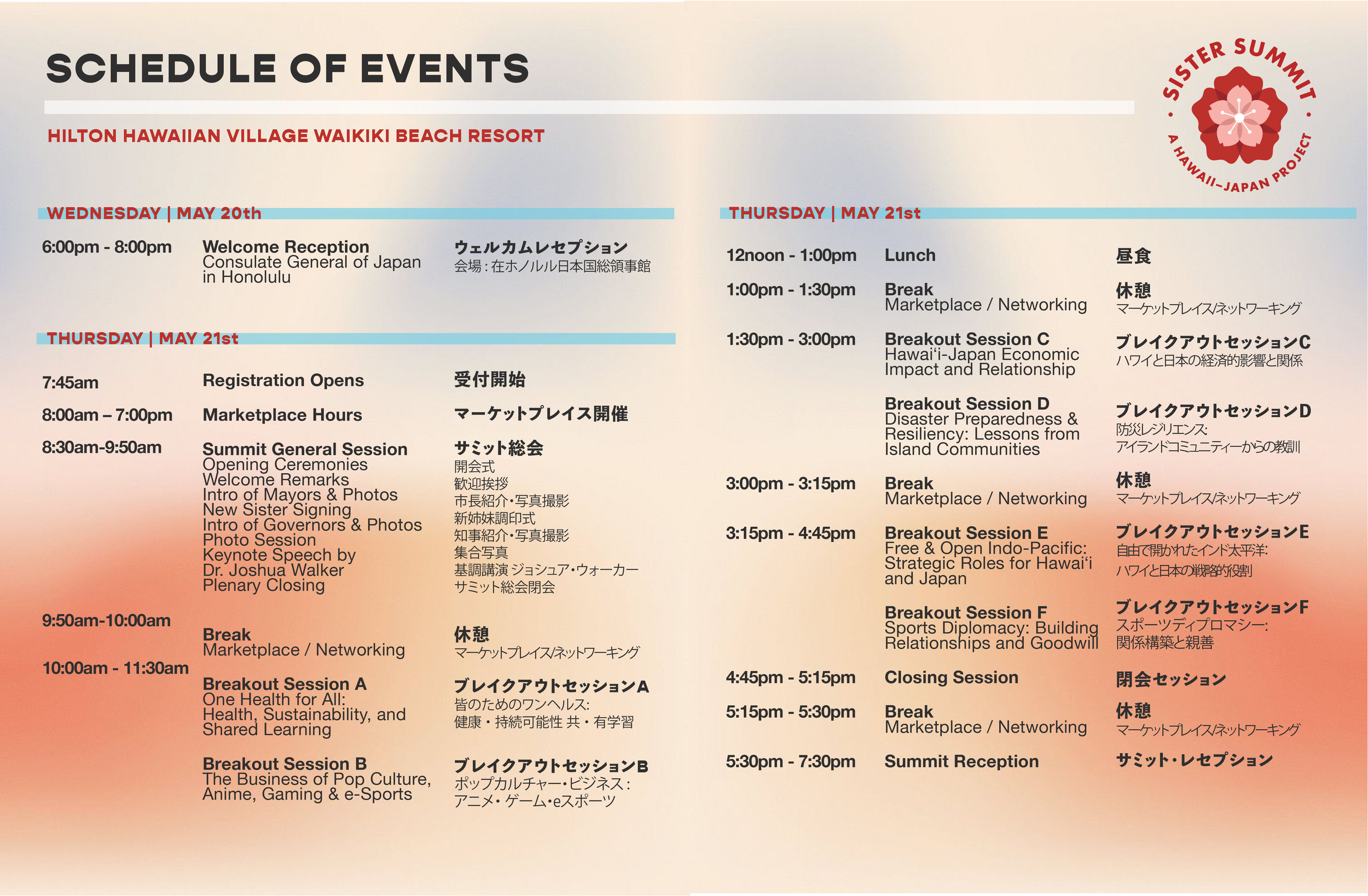
[VIEW SCHEDULE OF EVENTS IN PDF FORM]
SPONSORSHIP
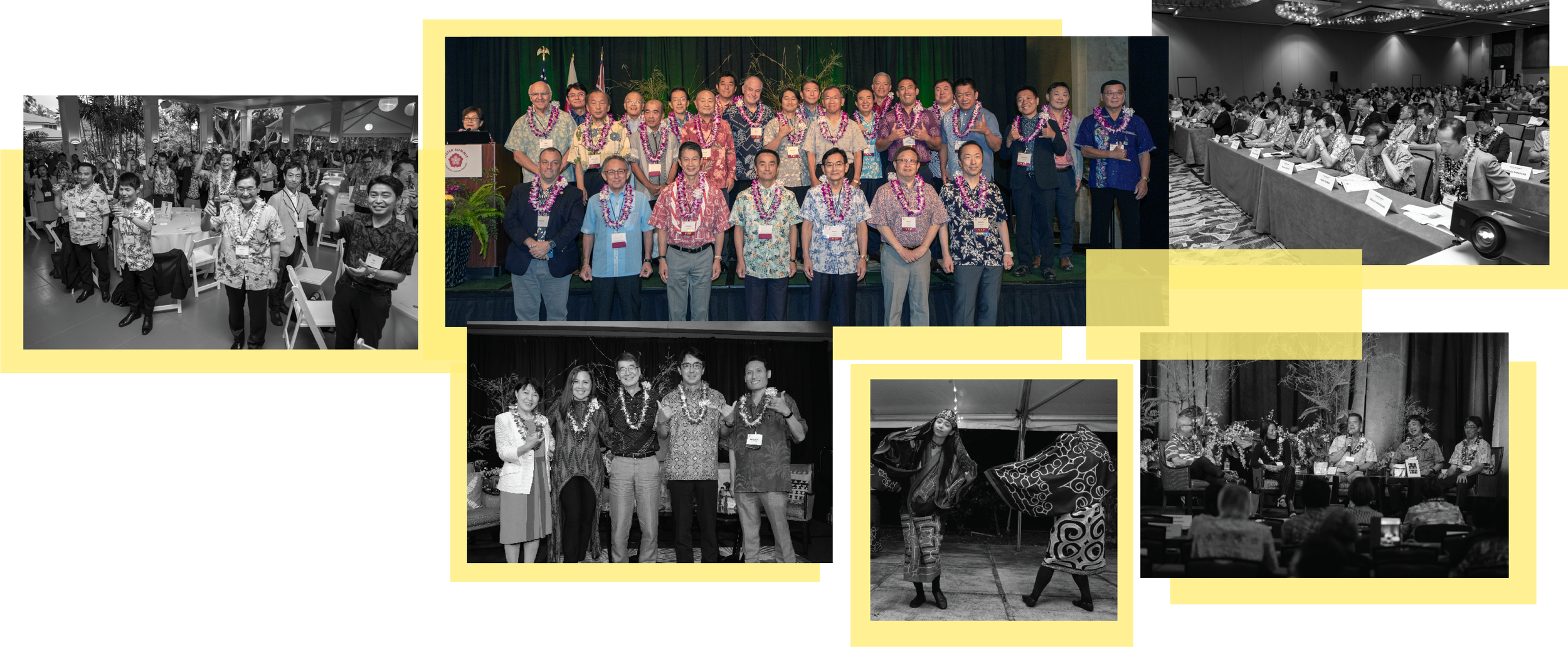
With the support of our generous sponsors, we are able to bring leaders together for the second Hawaiʻi–Japan Sister State and Sister City Summit in Honolulu, Hawaiʻi. Your sponsorship will help strengthen these vital relationships and make a meaningful difference.
DIAMOND SPONSOR
EMERALD SPONSOR
SAPPHIRE SPONSOR
PEARL SPONSOR
DIAMOND SPONSOR

EMERALD SPONSOR






SAPPHIRE SPONSOR









PEARL SPONSOR





MARKET PLACE
THURSDAY, MAY 21
8AM - 7PM
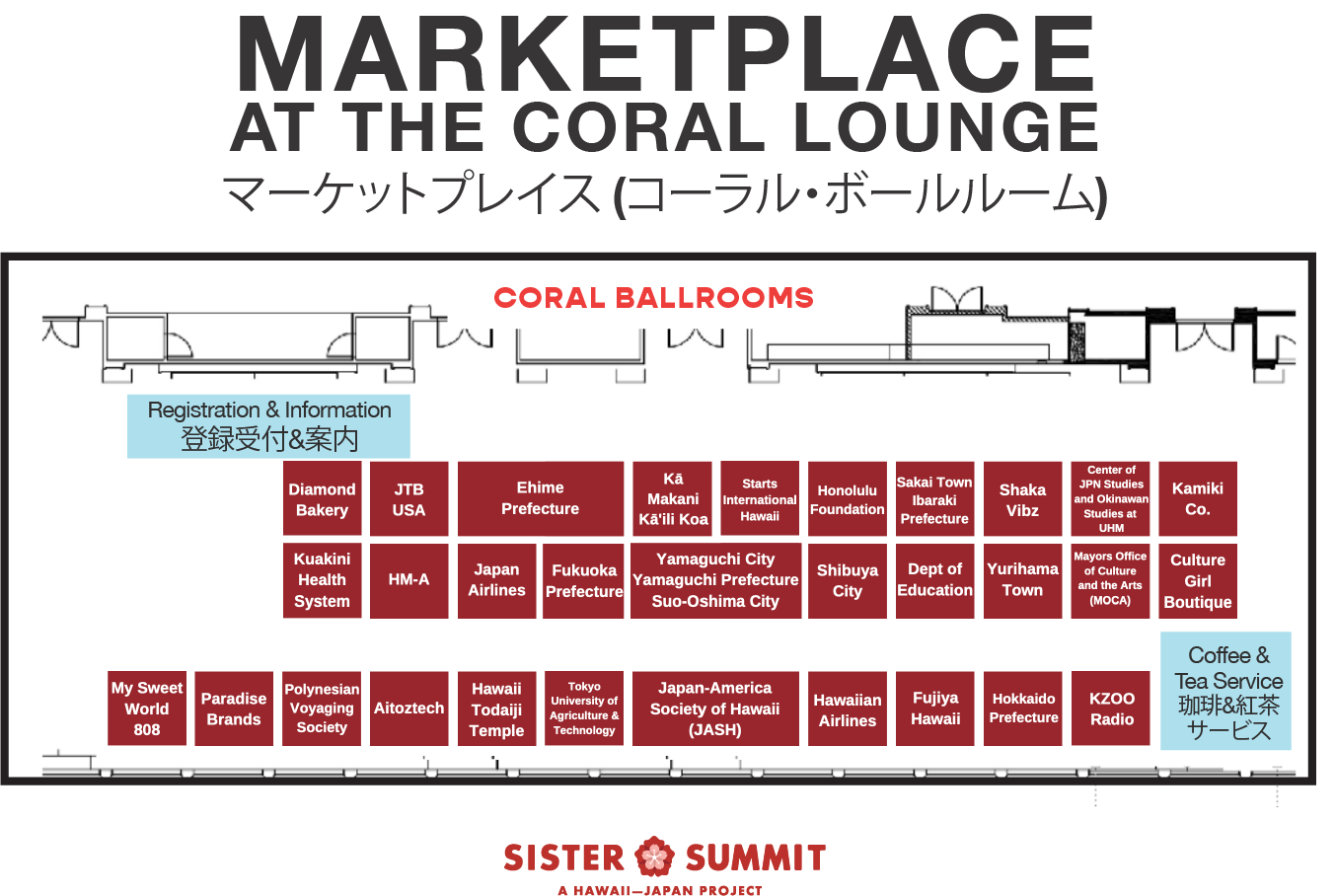
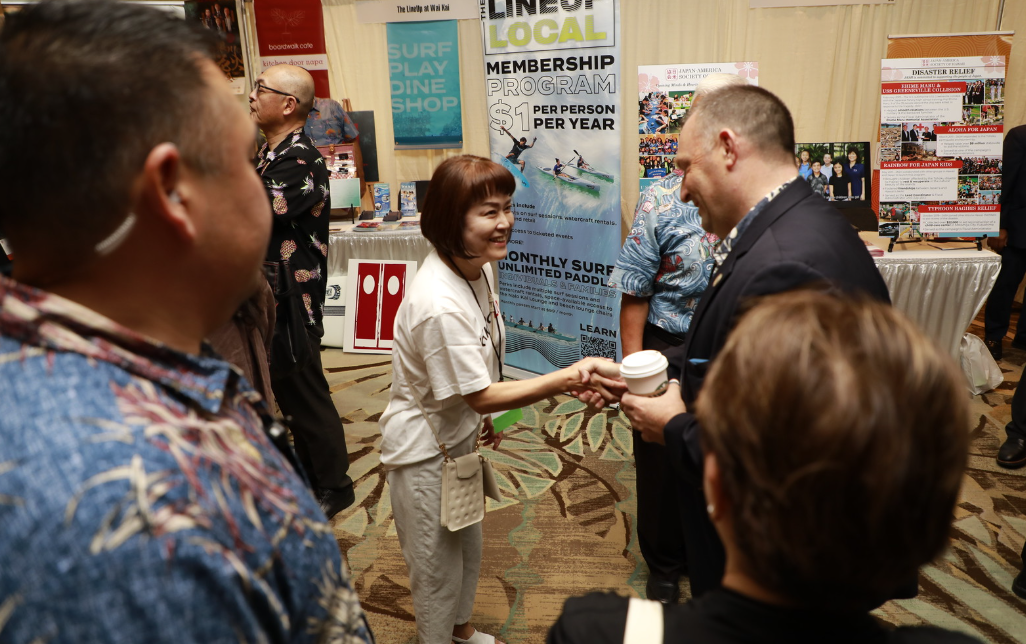
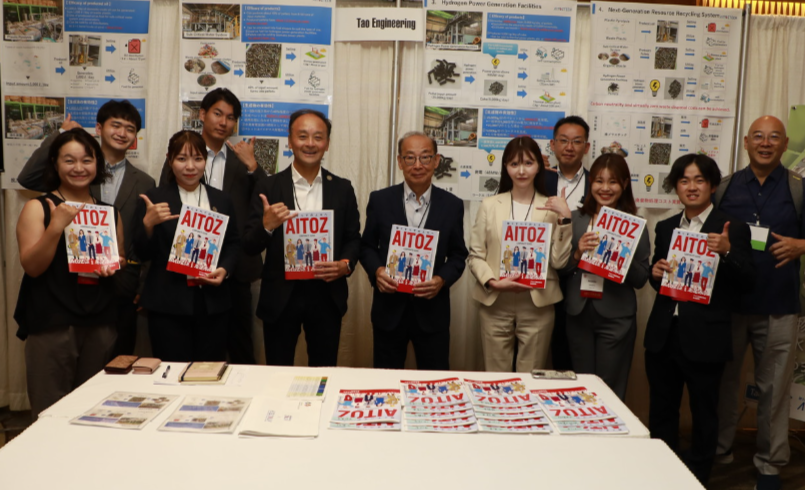
The Sister Summit Marketplace will be open in the Hilton Hawaiian Village’s Coral Ballroom lounge featuring booths from Japan and Hawaii. Government and business entities will showcase their services and products, exchange ideas and information, and promote new ways to develop and maintain robust sister relationships.
NETWORK WITH EXHIBITORS
RESERVE AN EXHIBITOR BOOTH
HONORARY CHAIRS | 名誉委員長
Governor Josh Green | ジョシュ・グリーン/ハワイ州知事
Honolulu Mayor Rick Blangiardi | リック・ブランジャルディ/ホノルル市長
Hawaii Mayor Kimo Alameda | キモ・アラメダ/ハワイ郡長
Maui Mayor Richard Bissen | リチャード・ビッセン/マウイ郡長
Kauai Mayor Derek Kawakami | デリック・カワカミ/カウアイ郡長
Consul General of Japan in Honolulu Hideaki Chotoku | 長徳英晶 在ホノルル日本国総領事
CONVENER | 議長団体
Japan-America Society of Hawaii | ハワイ日米協会
PRESENTING SPONSOR | プレゼンティング・スポンサー
State of Hawaii | ハワイ州
Department of Business, Economic Development & Tourism | 産業経済開発観光局
SECRETARIAT | 事務局
Japan Airlines | 日本航空
CO-CHAIRS | 共同代表
Reyna Kaneko | レイナ・カネコ
Sal Miwa | 三輪久雄