
On October 27, 2026, the Japan-America Society of Hawaii (JASH) held its 66th Japan Day program, generously sponsored by the Freeman Foundation and McInerny Foundation. Approximately 190 students from H.P. Baldwin High School, Kalani High School, Kaua’i High School, Kealakehe High School, Pāhoa High & Intermediate School, Roosevelt High School, and University Laboratory School gathered at the Japanese Cultural Center of Hawaii’s Generations Ballroom to enjoy a day of cultural activities.
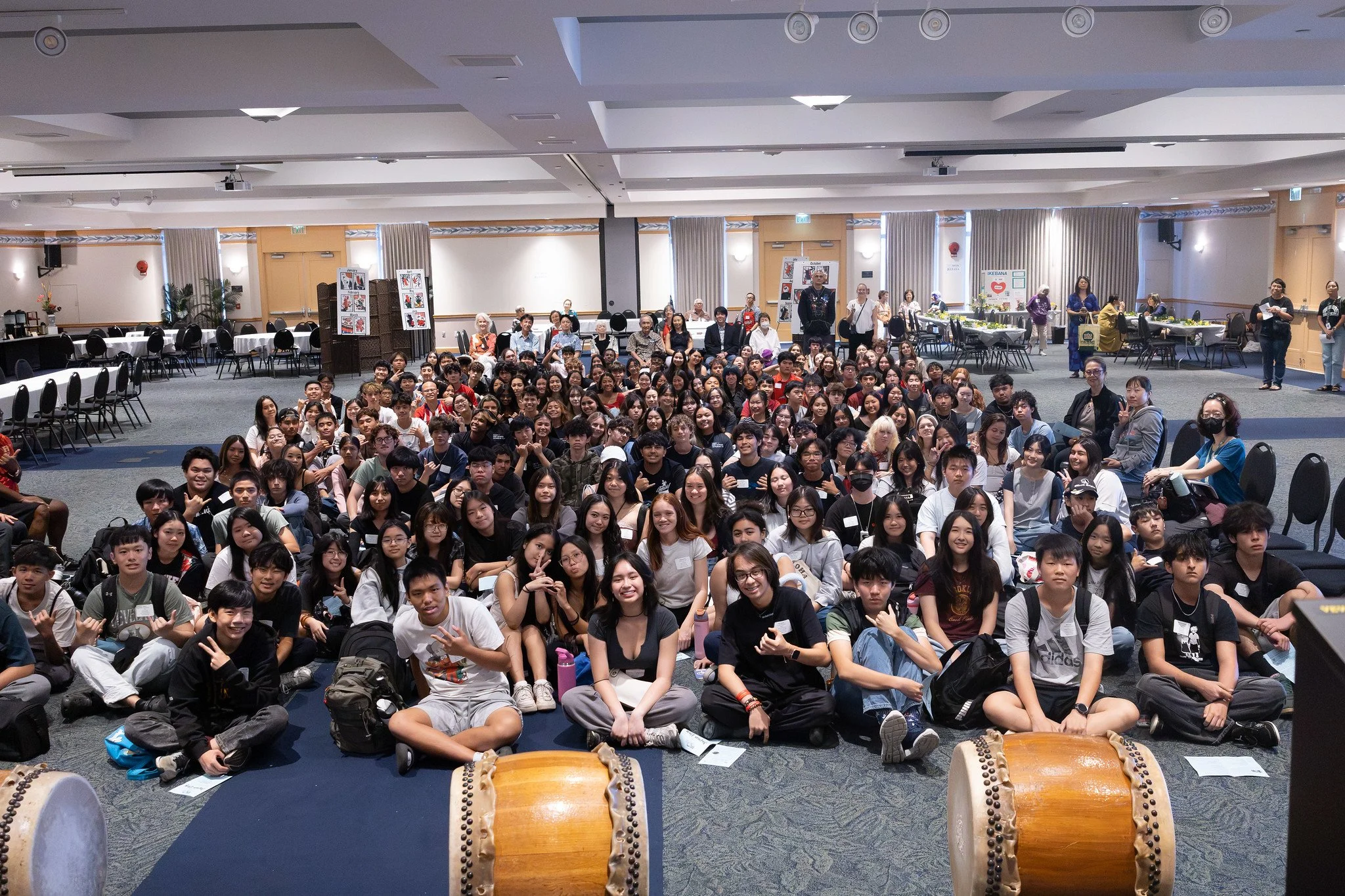
Held twice a year, Japan Day is JASH’s longest-running educational program, providing free, hands-on Japanese cultural experiences for middle and high school students across Hawaii. Since its establishment in 1993, Japan Day has welcomed more than 8,900 students from 71 public and private schools, fostering greater understanding and appreciation of Japanese culture among Hawaii’s youth for more than three decades. Support from the McInerny Foundation has enabled JASH to expand the program’s reach and serve more students, while additional funding from the Freeman Foundation has helped make participation possible for more neighbor island schools.
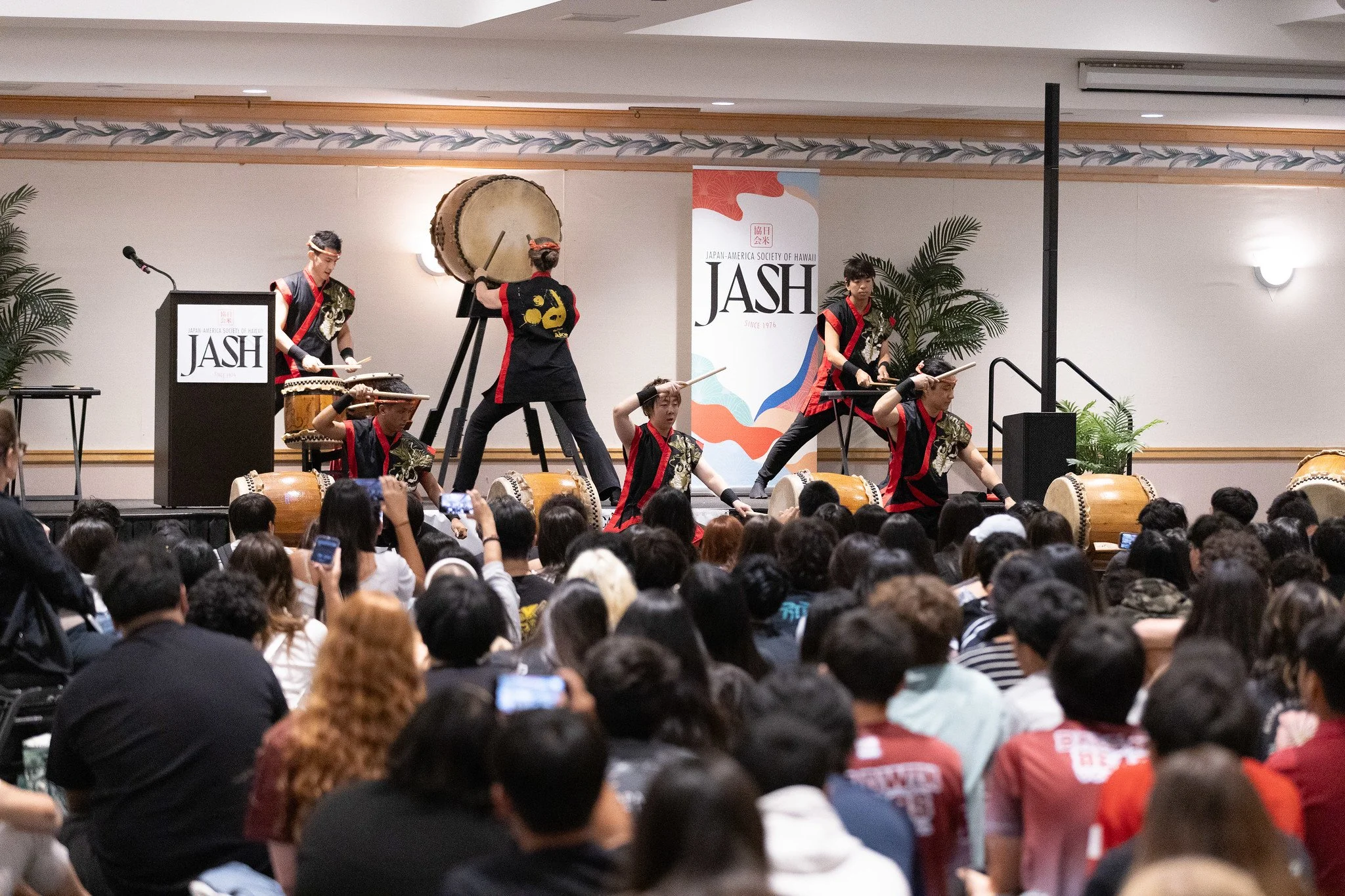
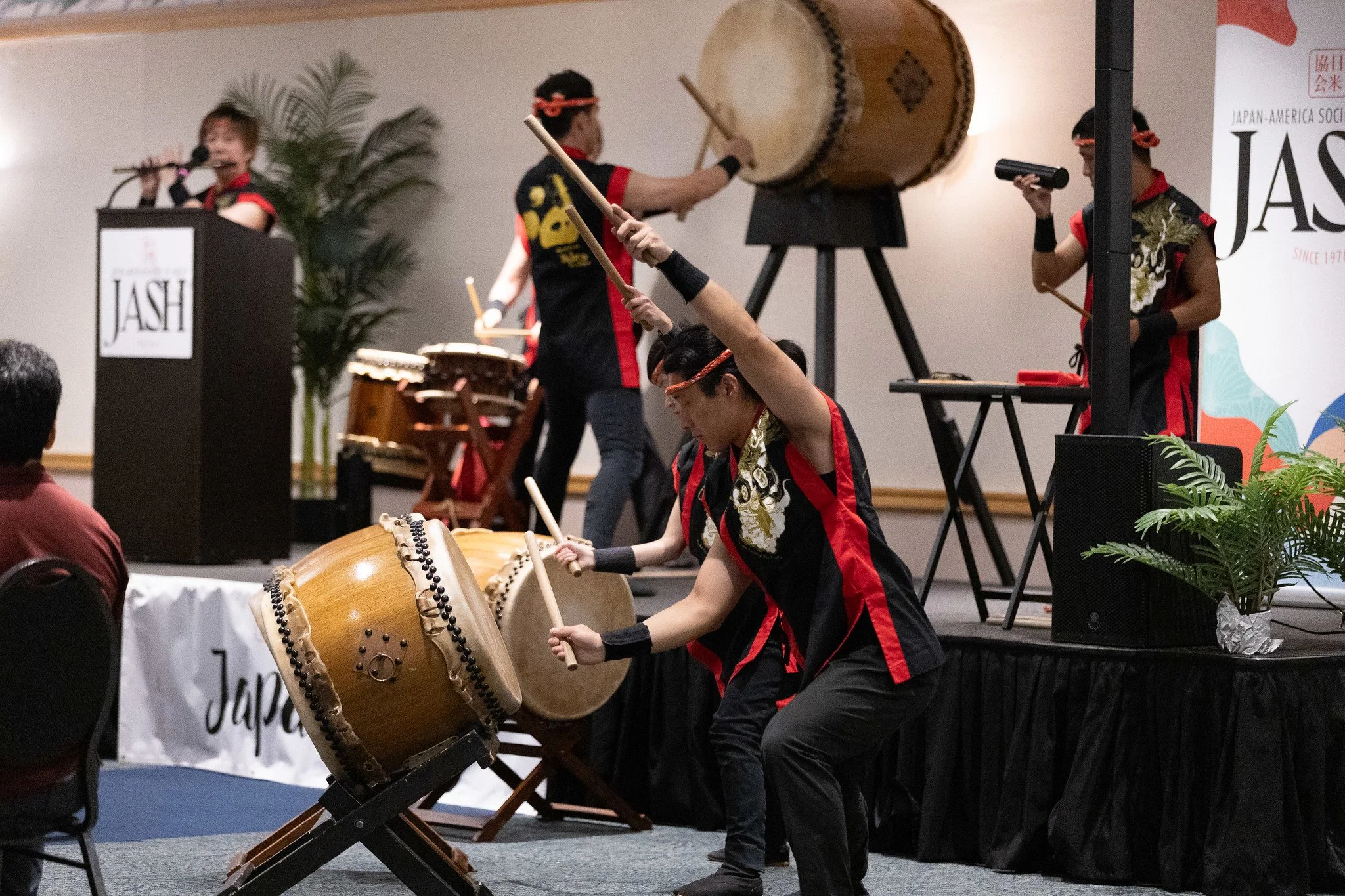
The program opened with welcoming remarks from JASH President Reyna Kaneko and JASH Chair Karen Knudsen. JASH was also honored to welcome Consul General Hideaki Chotoku, who shared greetings and expressed his support for the event. Members of the Taiko Center of the Pacific energized the audience with a dynamic taiko performance and demonstration, introducing students to the many sounds and expressions that can be created with the traditional Japanese drums.
Following the opening ceremony, students participated in four of eight cultural sessions led by approximately 40 volunteer instructors and cultural experts. These hands-on workshops introduced students to a variety of Japanese traditions and practices, including bon dance, calligraphy, ikebana (flower arranging), hanafuda (Japanese playing cards), karate, soroban (Japanese abacus), tea ceremony, and yukata.
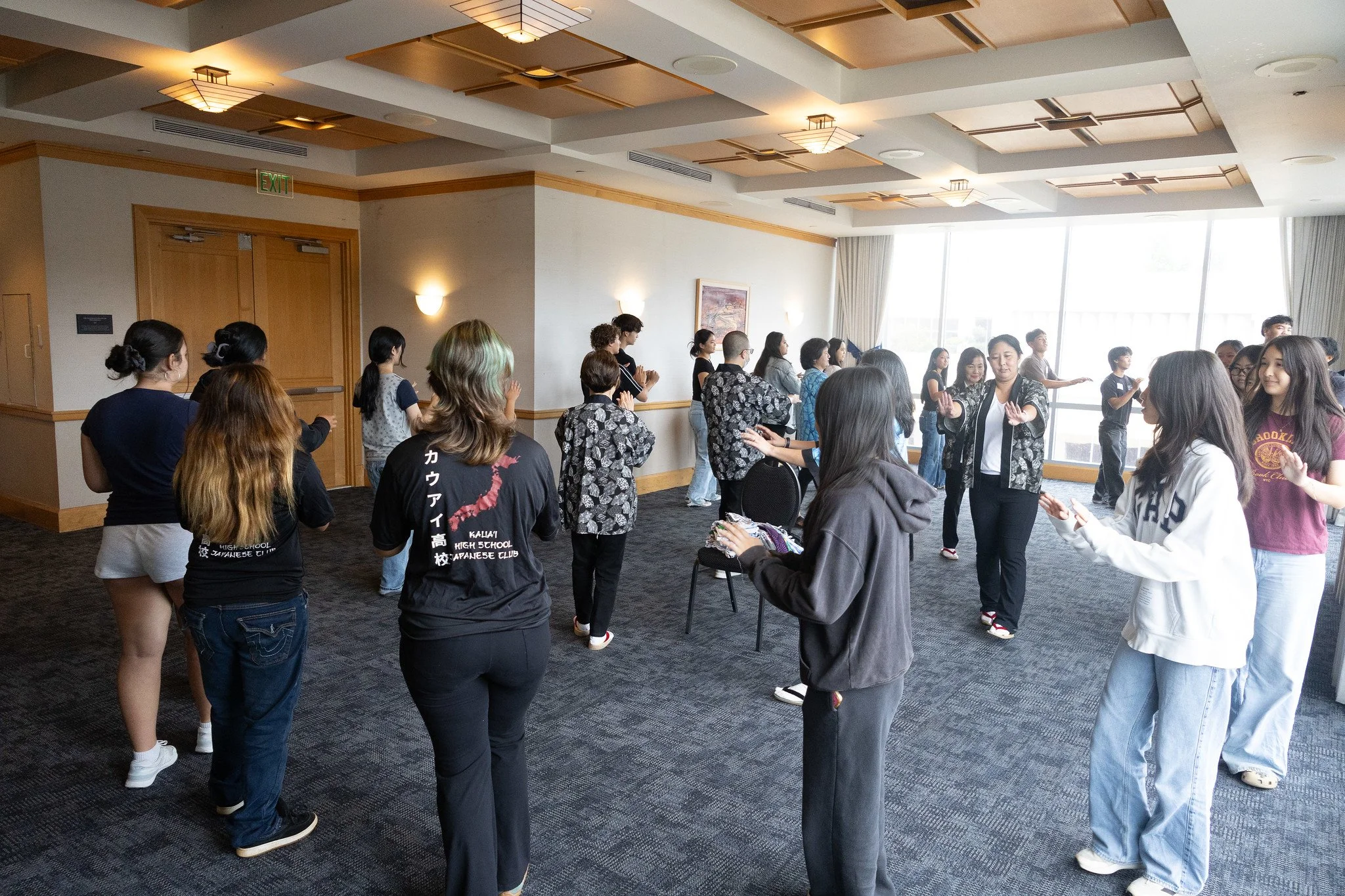
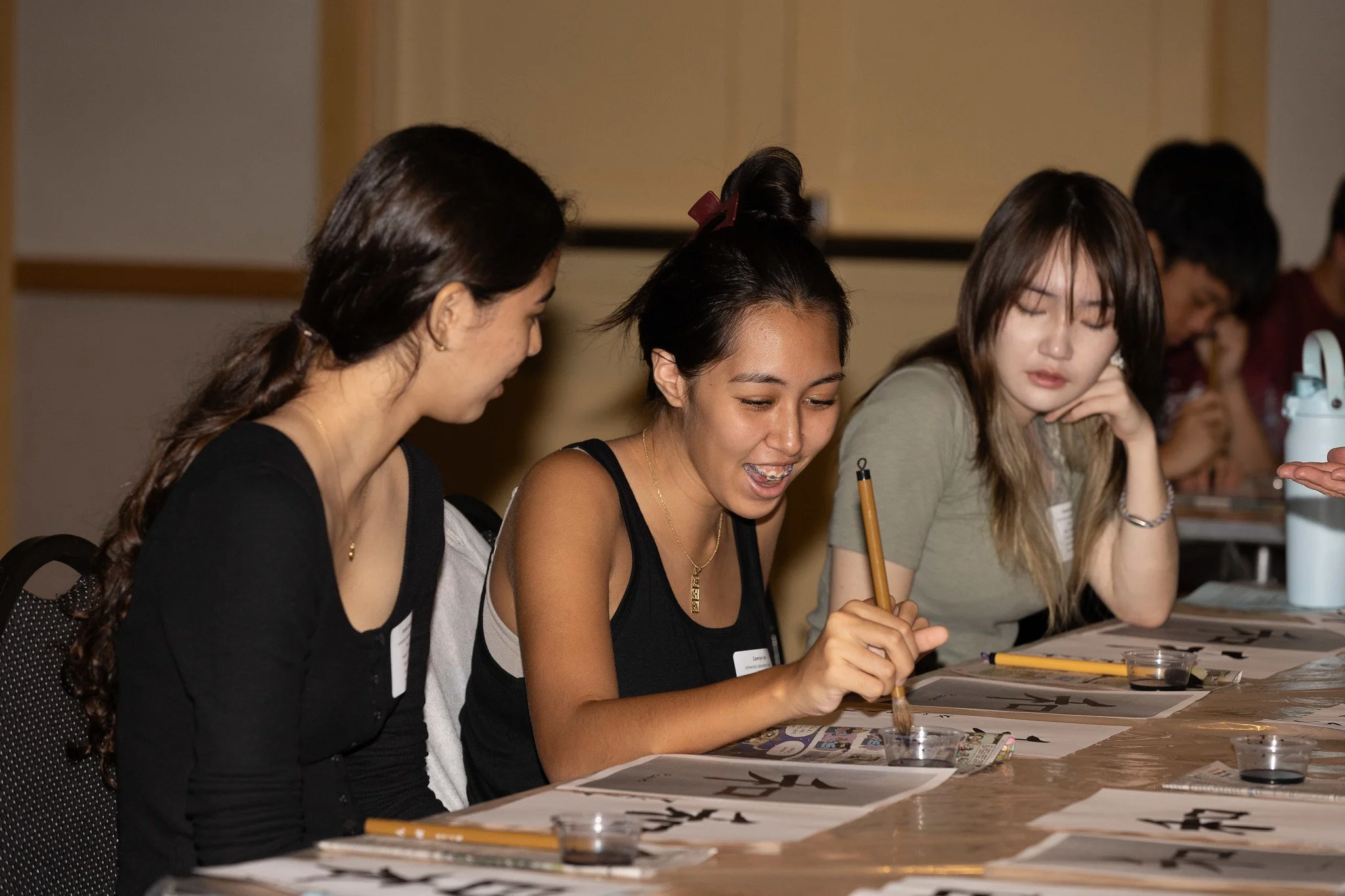
Students learn bon dance moves and steps; Students practice calligraphy strokes.
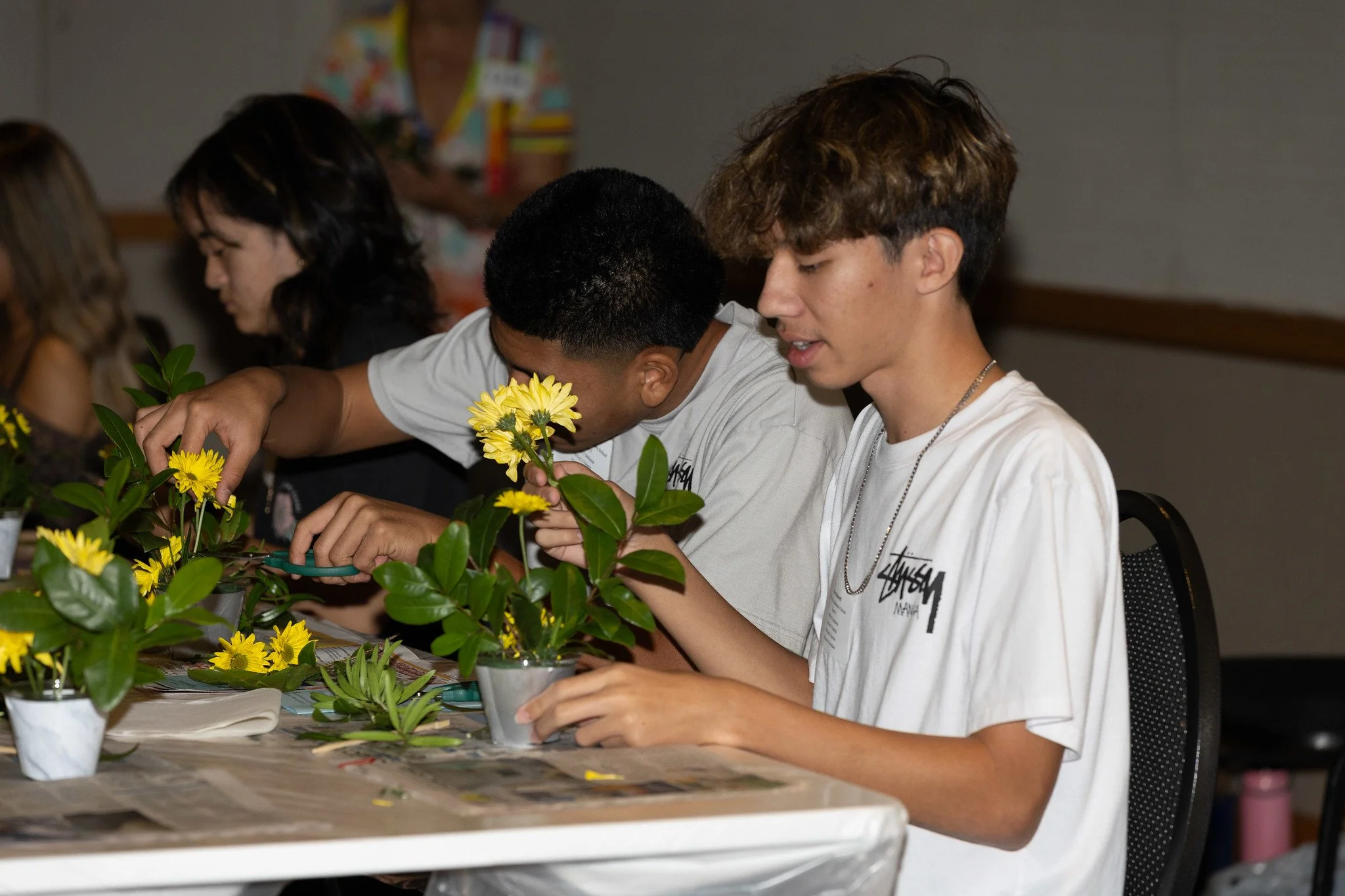
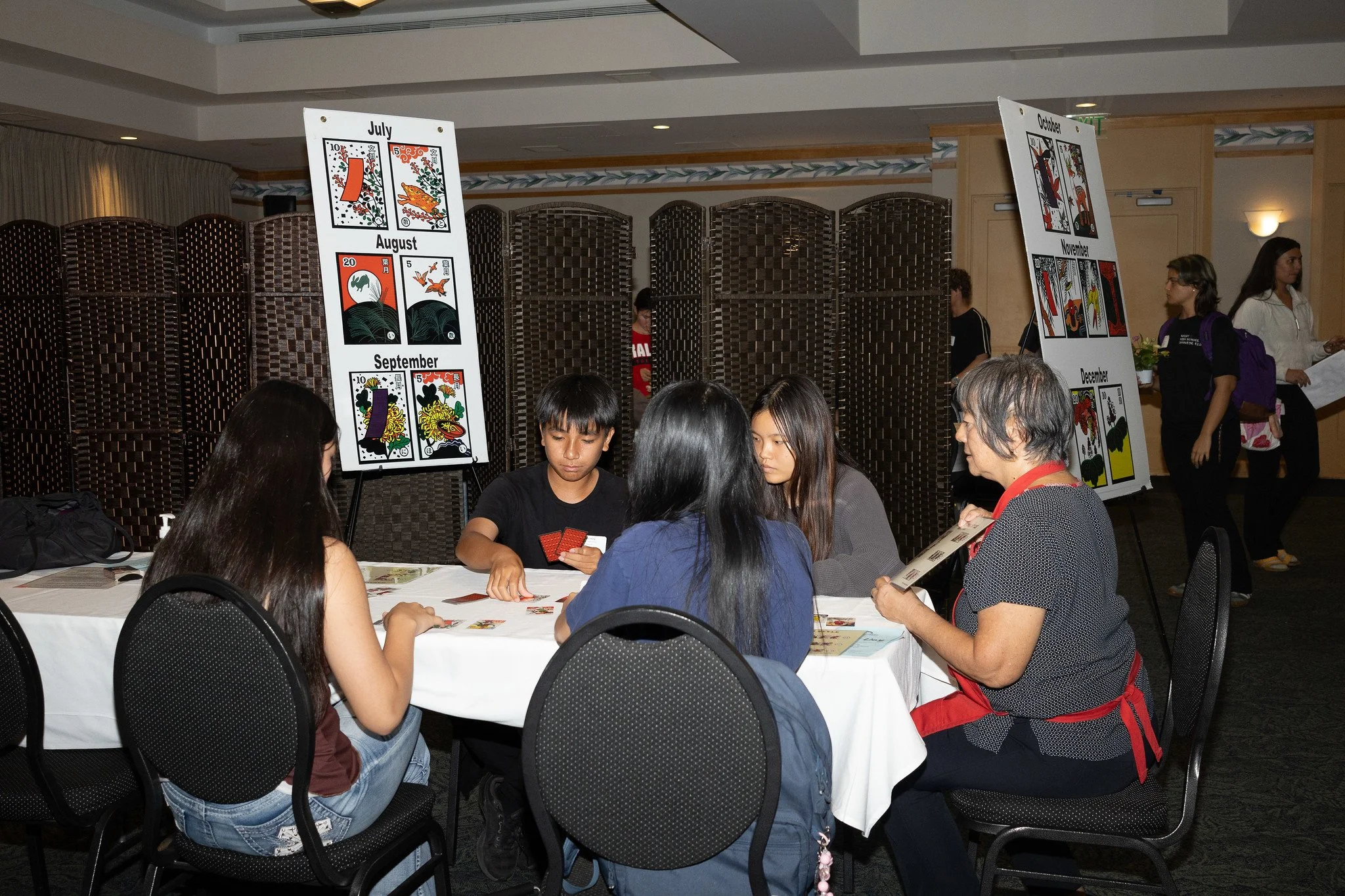
Students learn the basics of ikebana; Students learn how to play hanafuda
Japan Day provides students with a hands-on introduction to Japanese arts and culture, complementing classroom learning through interactive experiences that encourage cultural appreciation and new friendships. Students shared how the program broadened their understanding of Japanese traditions and created opportunities to connect with others. A student from Kealakehe High School reflected, “Japan day is a great way to experience Japanese culture in Hawaii. It's a lot of fun to learn new traditions and make friends with people who are also interested in Japan. Thank you for making this a memorable experience.”
A student from Kalani High School expressed their appreciation, “I would like to appreciate all the volunteers and the people who organized this event, because even though the activities were so much fun, the staff and the people there made it so much more fun; they were really engaging with us and I can tell they are dedicated to showcasing Japanese culture. Thank You!”
Beyond introducing students to new cultural experiences, Japan Day also helps them deepen their connections to traditions they may already know. Reflecting on a personal connection to one of the sessions, a student from H.P. Baldwin High School commented, “Ikebana is similar to how I arrange flowers in vases for loved ones. It is different in the sense that Japan values a lot of abstract shapes and heights of the plant. But ultimately it is closely related because it incorporates a range of different flowers/plants.”
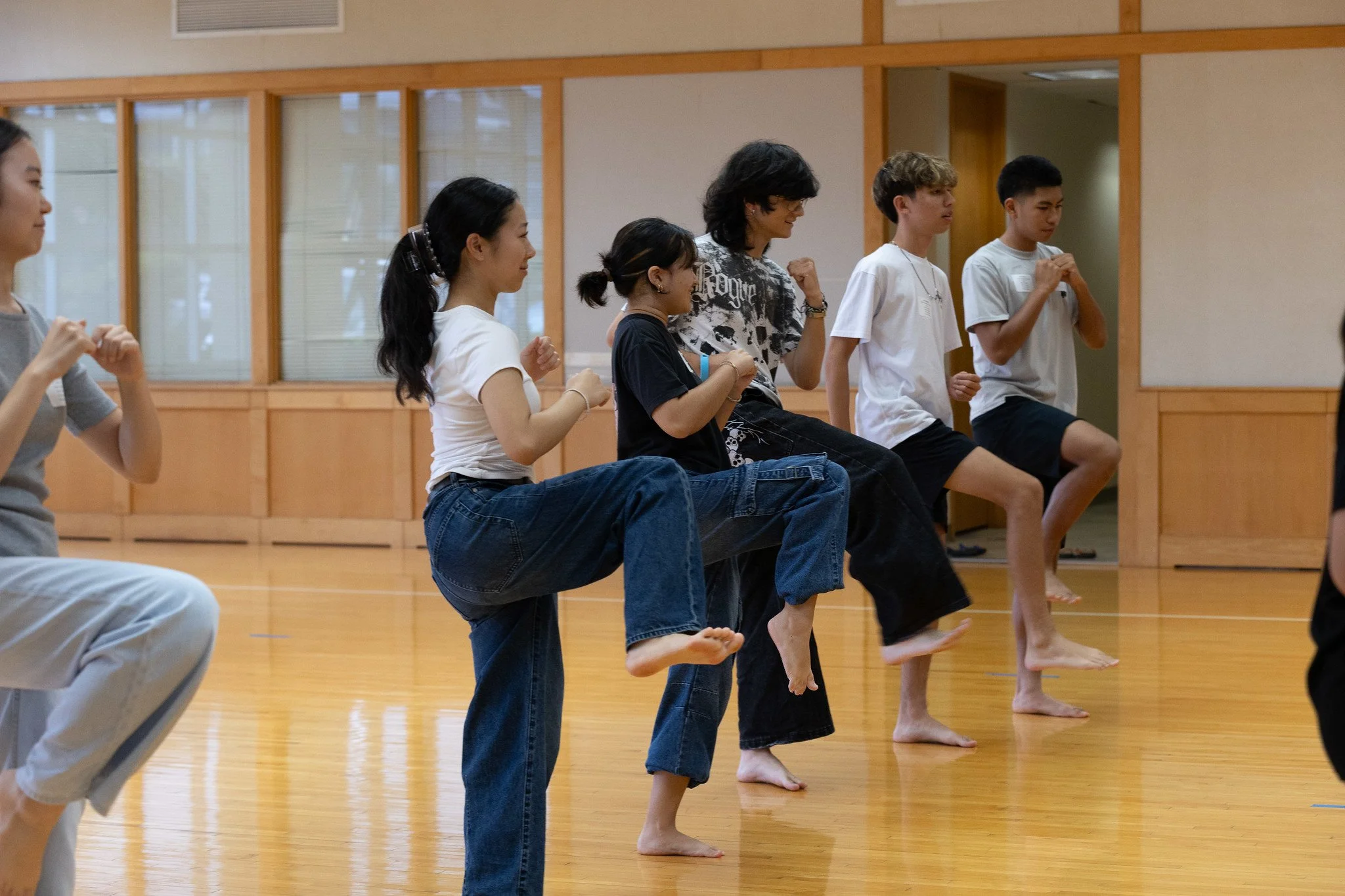
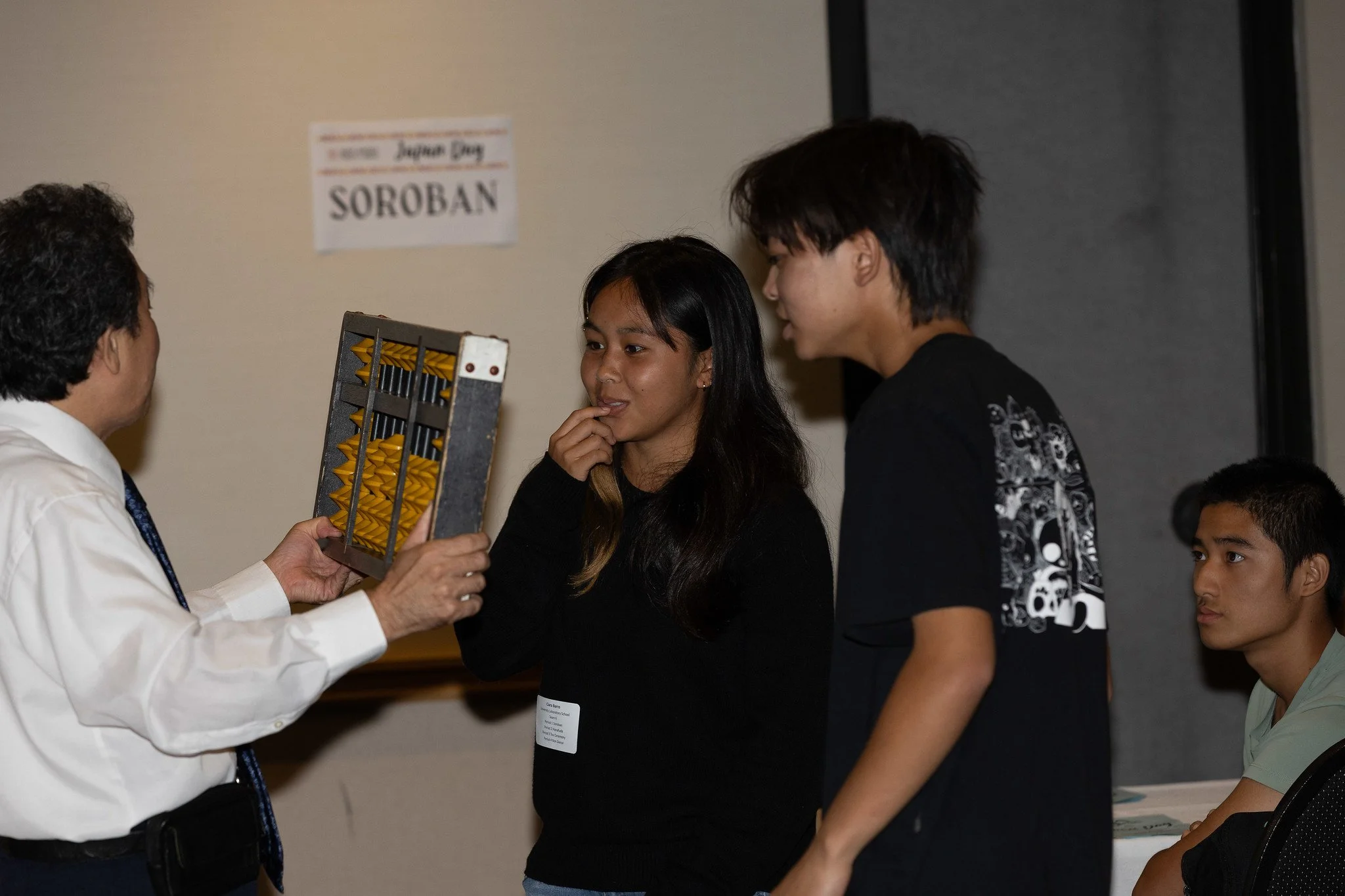
Students the basics of karate; Students learn how to use the soroban
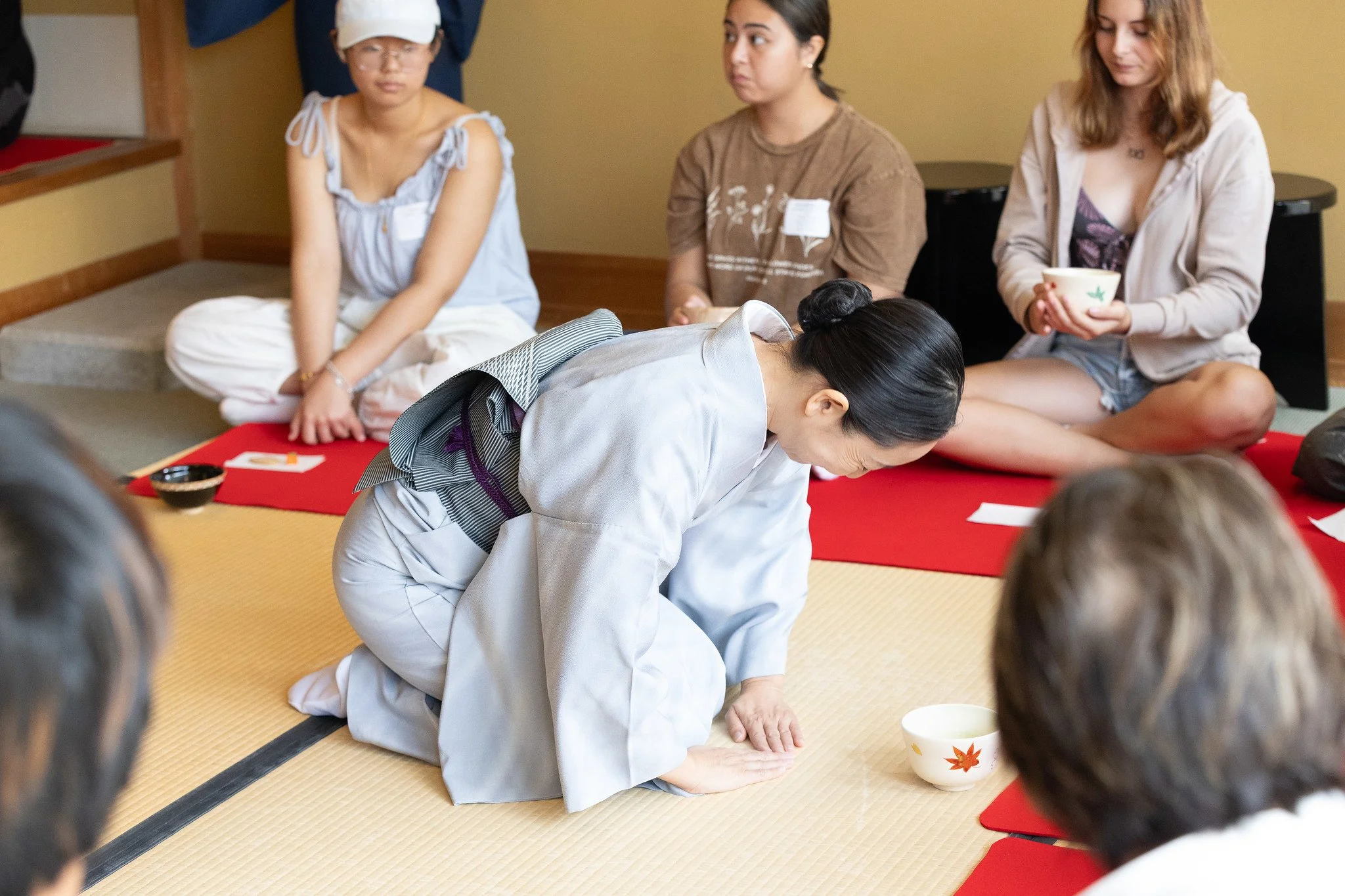
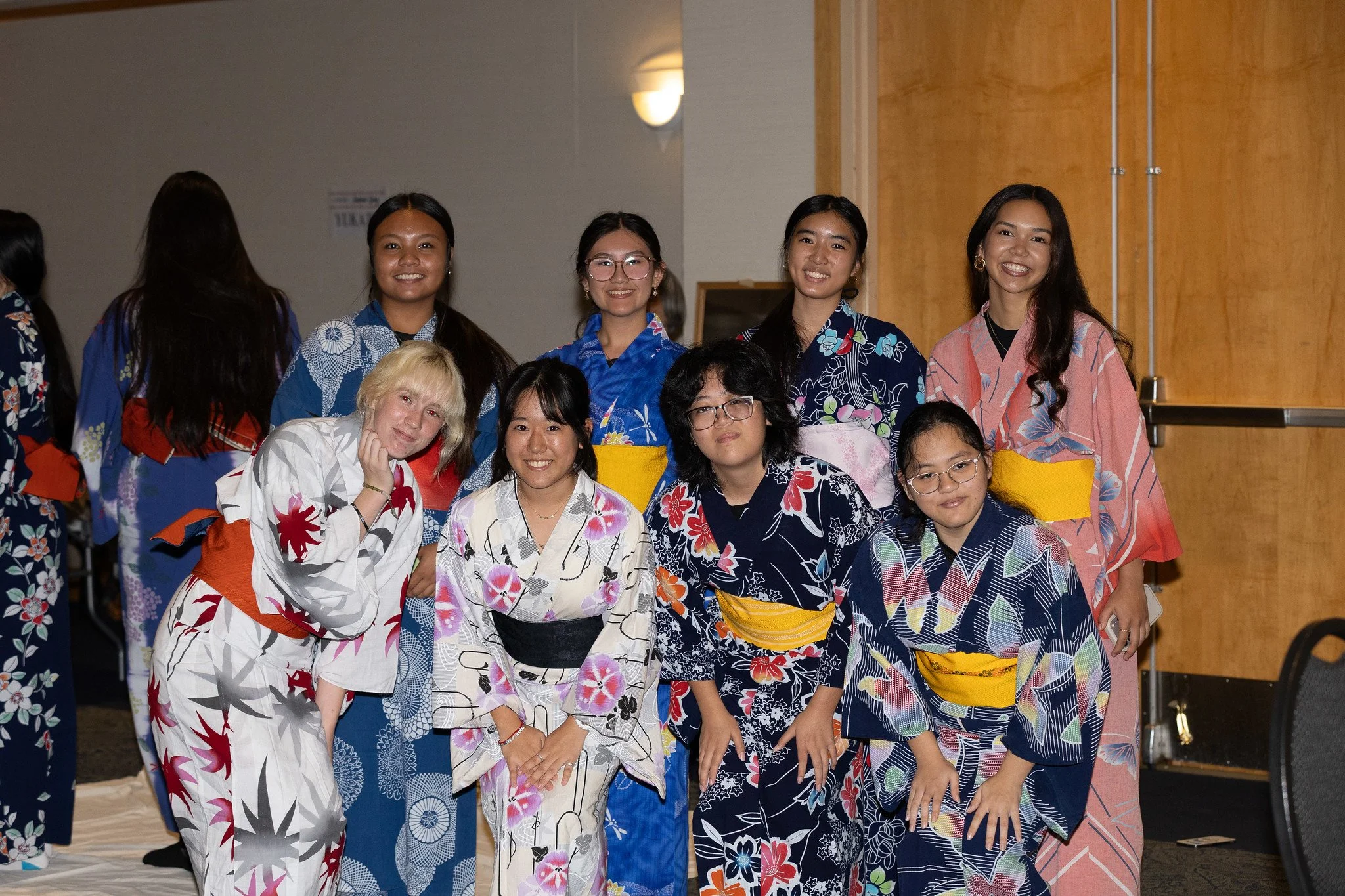
Students learn about the art of tea ceremony; Students try on yukata
After the Japan Day program, neighbor island students from Hawaiʻi Island, Kaua’i, and Maui enjoyed private gallery tours of the Japanese Cultural Center of Hawaiʻi’s exhibit Okage Sama De: I Am What I Am Because of You. A student from Kaua’i High School commented, “It was really fascinating to learn about the history. Getting to see a glimpse of what life was like for them back then was interesting but also saddening. Learning about them being called by the numbers on their tags then by their names was sad because of the fact they were dehumanized.” Students also visited other cultural sites on Oahu, including Byodo-In Temple and Don Quijote, before returning to their respective islands.
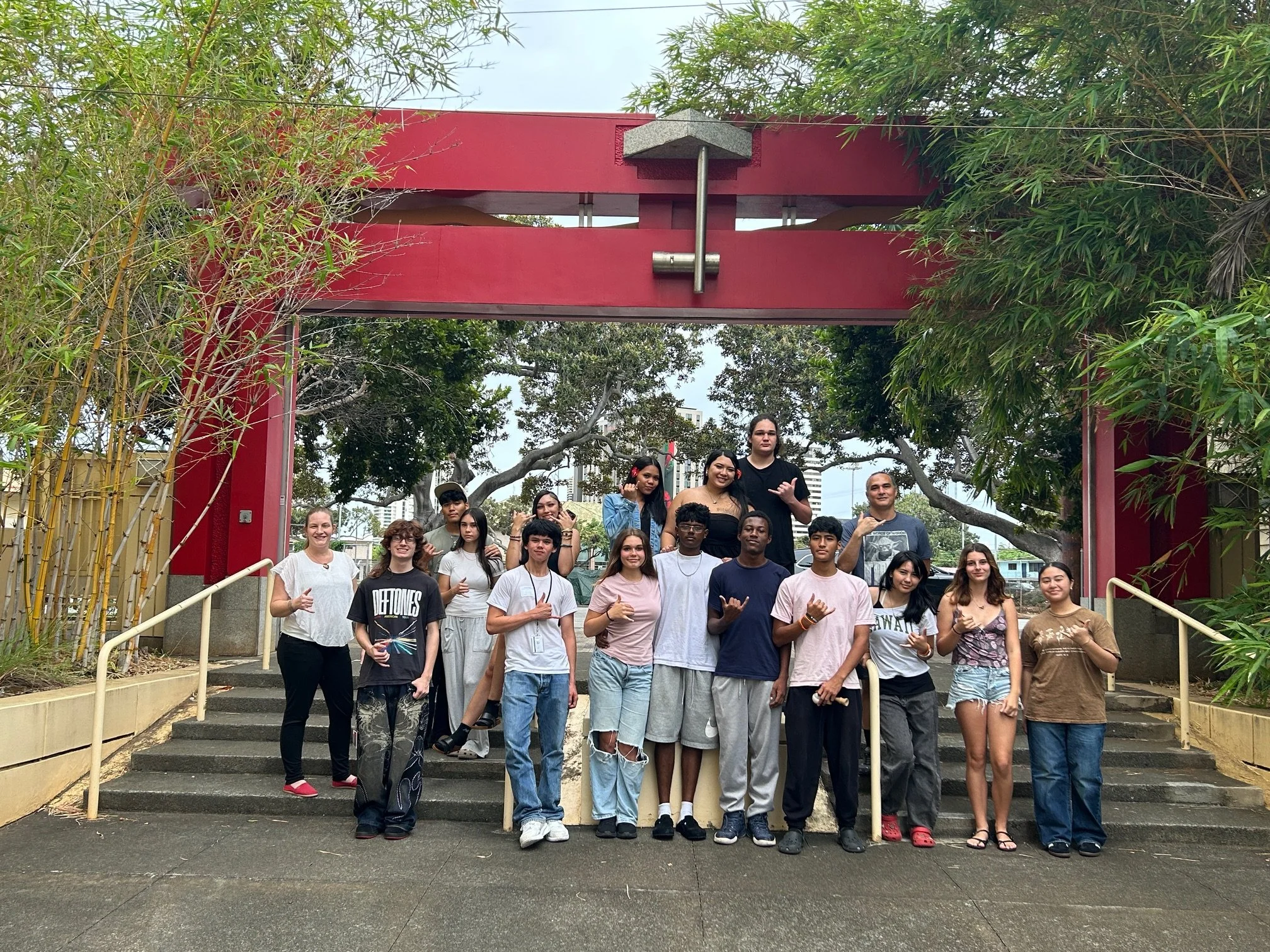
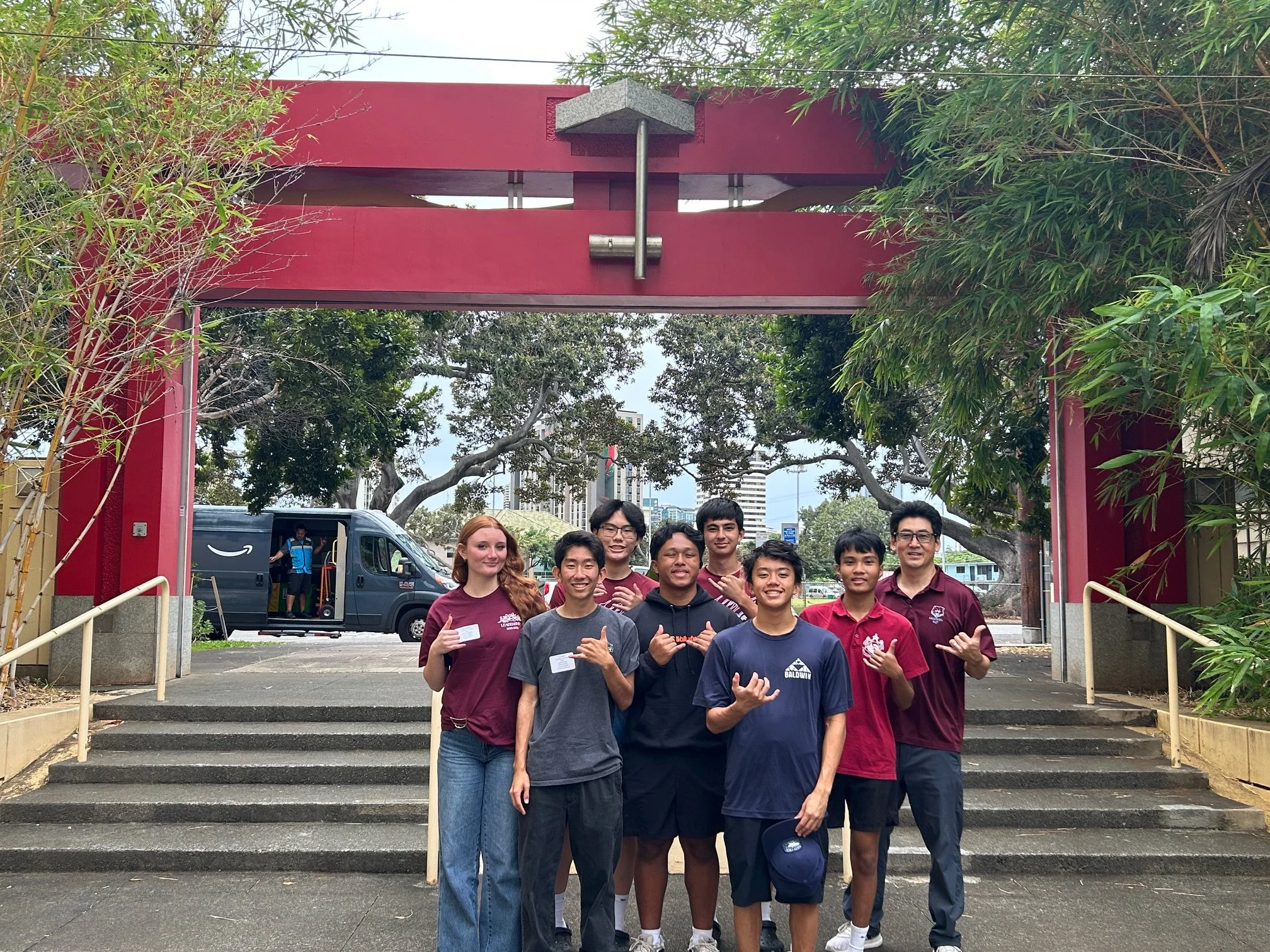
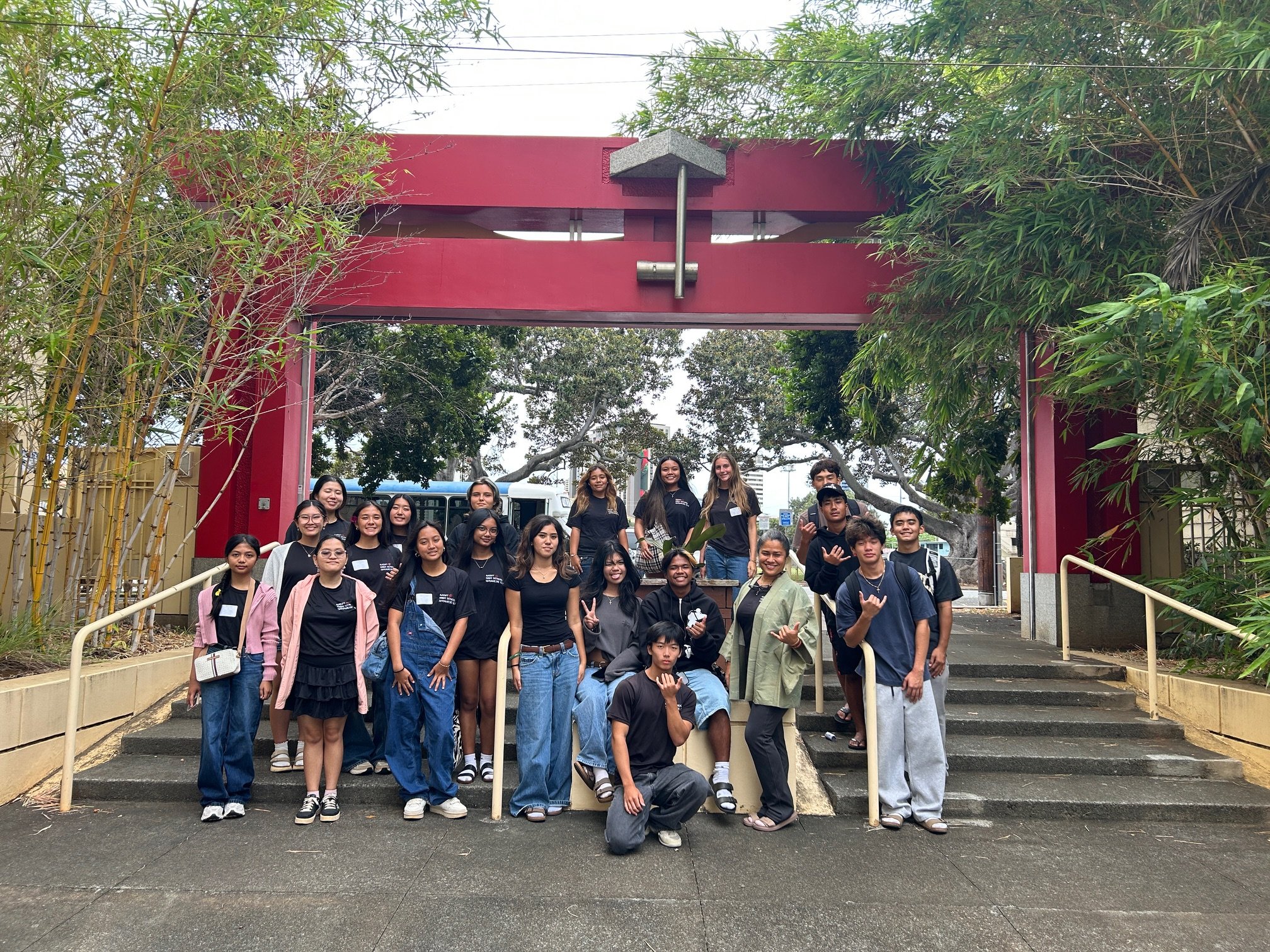
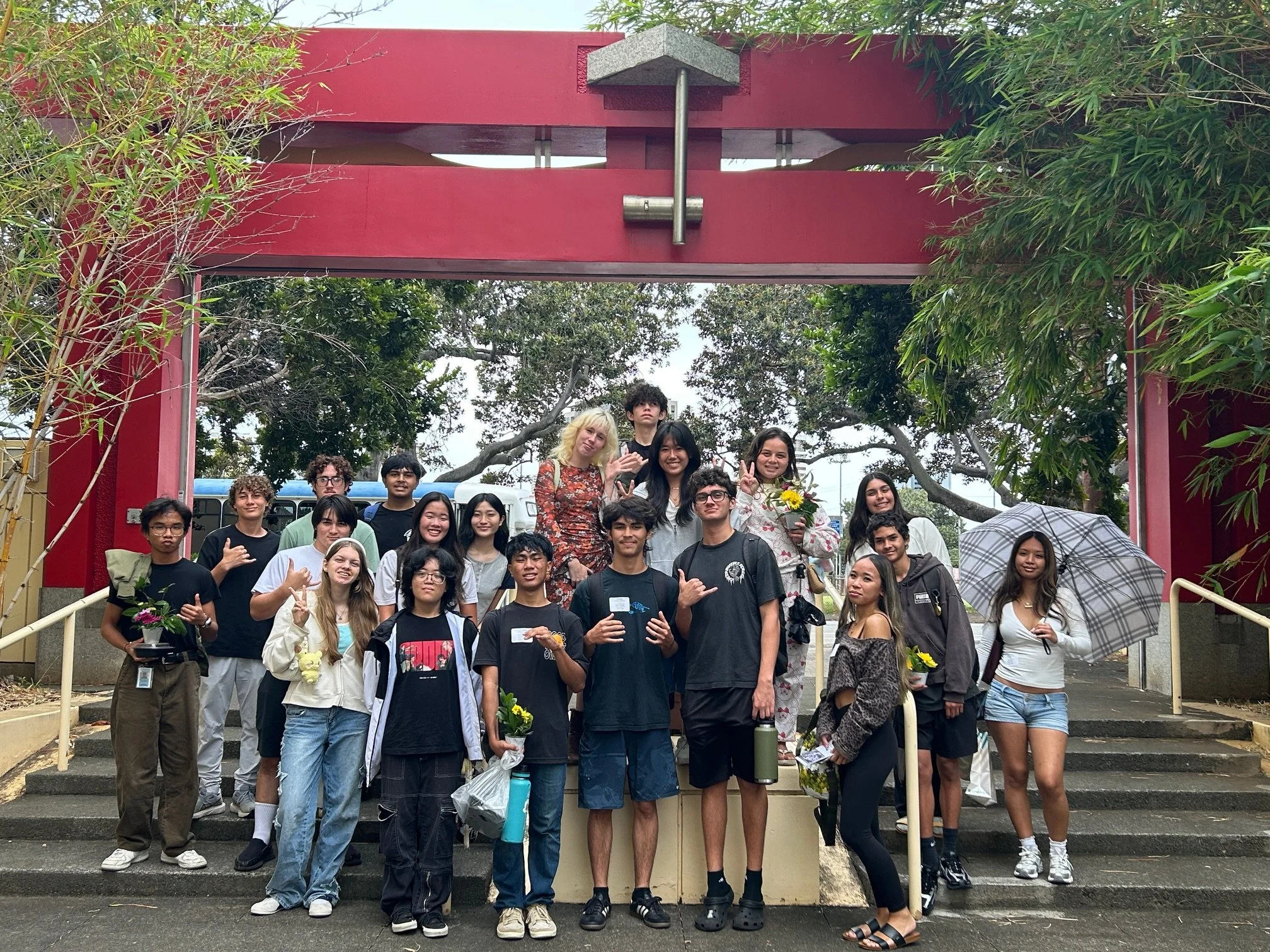
JASH extends its sincere gratitude to the generous sponsors of Japan Day: the Freeman Foundation and McInerny Foundation. A special mahalo also goes to the dedicated volunteer experts who made the program possible: Ms. Lydia Morikawa and members of Hawaii Shin Kobukai (bon dance); Ms. Noriko Iwai and Mr. Jeff Kishi of Kaede Calligraphy School Hawaii (calligraphy); Ms. Caroline Abe and members of Ikebana International, Honolulu Chapter 56 (ikebana); Ms. Helen Nakano and members of Hanafuda Hawaii (hanafuda); Mr. Jordan Silva of Japan International Karate Center (karate); Mr. Hideaki Oshima and Mrs. Yasuko Oshima of Araki Hiroya Soroban School (soroban); Mr. Hitoshi Murata and members of the Urasenke Foundation (tea ceremony); and Ms. Mutsuko Narumi and former members of the UH Kimono Project (yukata). JASH also thanks the Japanese Cultural Center of Hawaiʻi for providing private gallery tours of the Okage Sama De: I Am What I Am Because of You exhibit for the neighbor island students.
To learn more about our Japan Day program, visit our webpage at www.jashawaii.org/education/jd.